
 400-188-1518
15 Product Management Tools for 2026: Enterprise Team Selection Guide
Product teams in 2026 face a complex tooling landscape. This guide examines 15 proven solutions that support the full product lifecycle, from strategic portfolio planning through execution and delivery. The tools covered are: ONES, Airtable ProductCentral, Jira, Slack, Miro, Google Drive, Zendesk, Figma, Optimizely, Typeform, Snowflake, Azure DevOps, Salesforce, Gong, and GitHub.
Table of Contents
What defines an effective product management tool?
The most valuable solutions share three attributes: they connect strategy to execution, enable genuine cross-functional collaboration, and adapt to organizational workflows rather than imposing rigid methodologies. For enterprise environments, portfolio-level visibility becomes essential—tools must help leaders allocate resources across product lines while preserving team autonomy.
Research from McKinsey underscores that delivery predictability improves substantially when teams operate within an integrated technology stack. The selections below reflect this principle, emphasizing tools that reduce friction between functions rather than deepening existing silos.
Top 15 product management tools for 2026
These solutions represent a balanced ecosystem. No single tool dominates every use case; rather, effective product organizations combine specialized capabilities with unified data flow. User feedback summaries draw from G2, Gartner Peer Insights, and Capterra.
1. ONES — Enterprise R&D management
ONES serves as an integrated platform for organizations managing complex product development at scale. The system unifies project management, requirements tracking, knowledge bases, test management, CI/CD pipelines, and code repositories within a single architecture. This consolidation addresses a persistent enterprise pain point: tool fragmentation that obscures visibility and creates reconciliation overhead.
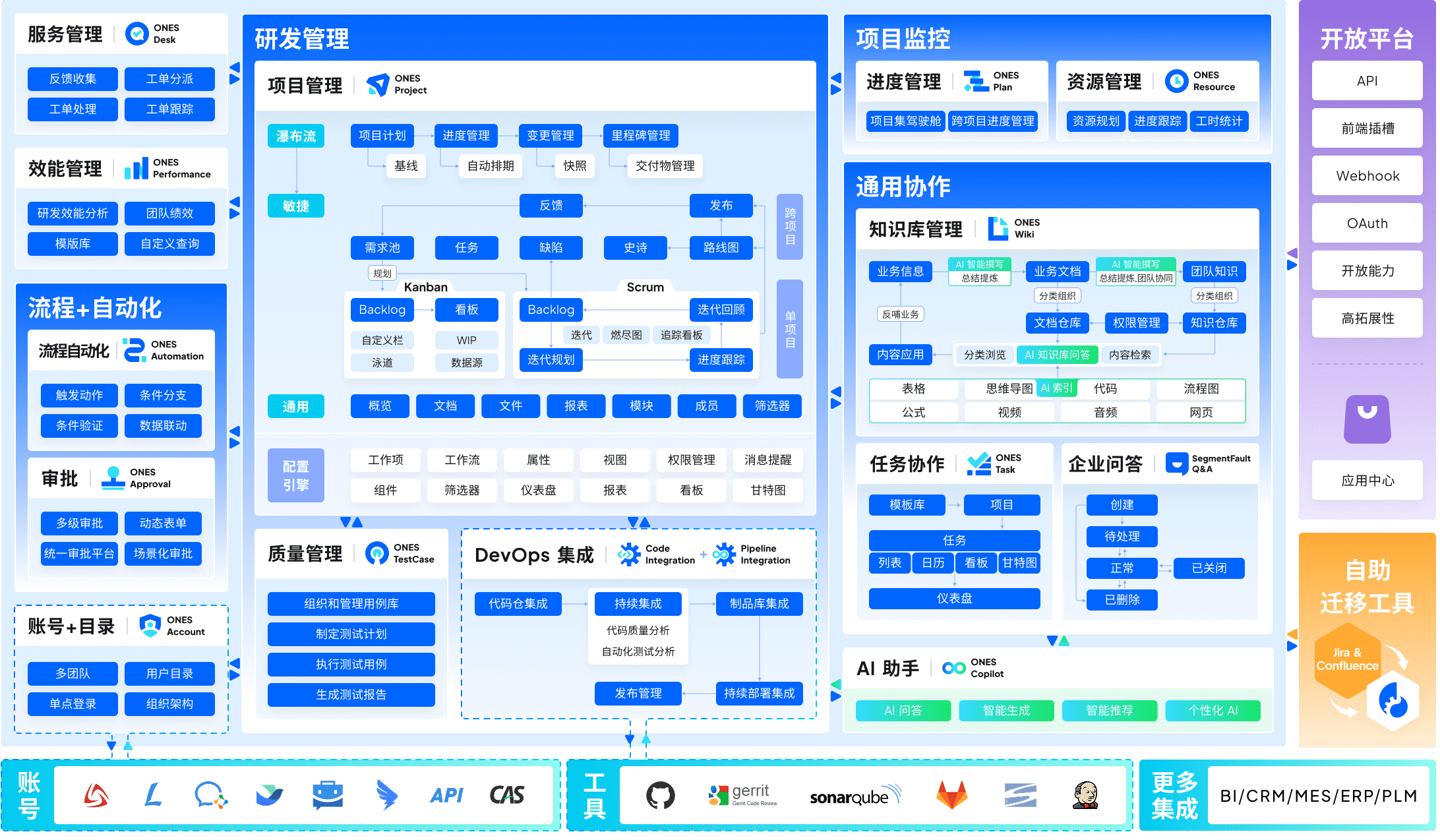
For large organizations, ONES provides configurable workflow engines, granular permission models, and cross-team governance structures. The platform emphasizes engineering effectiveness measurement, enabling leaders to baseline delivery quality and iterate toward improvement using operational data rather than anecdotal assessment.
Strengths:
- Unified architecture reduces integration maintenance and data synchronization failures
- Complex process support accommodates enterprise security and compliance requirements
- Built-in metrics framework supports continuous improvement programs
Considerations:
- Implementation investment aligns with organizational scale; smaller teams may find the capability set expansive
- Initial configuration requires alignment between platform administration and existing process owners
2. Airtable ProductCentral — Portfolio orchestration
Airtable ProductCentral connects strategic planning to feature execution through a relational data model. Portfolio managers centralize business requirements, optimize resource distribution across product lines, and maintain unified health metrics. The platform’s AI capabilities surface portfolio insights, identify cross-team dependencies, and automate coordination tasks.

Strengths:
- Adaptable data structure supports multiple methodologies without coding requirements
- AI-assisted roadmap summaries and OKR tracking reduce manual reporting burden
- Enterprise governance enables centralized visibility with departmental customization
Considerations:
- Initial architecture design benefits from deliberate planning; templates accelerate but do not eliminate this need
- Teams transitioning from basic spreadsheets encounter a learning curve that typically resolves within weeks
3. Jira — Development workflow management
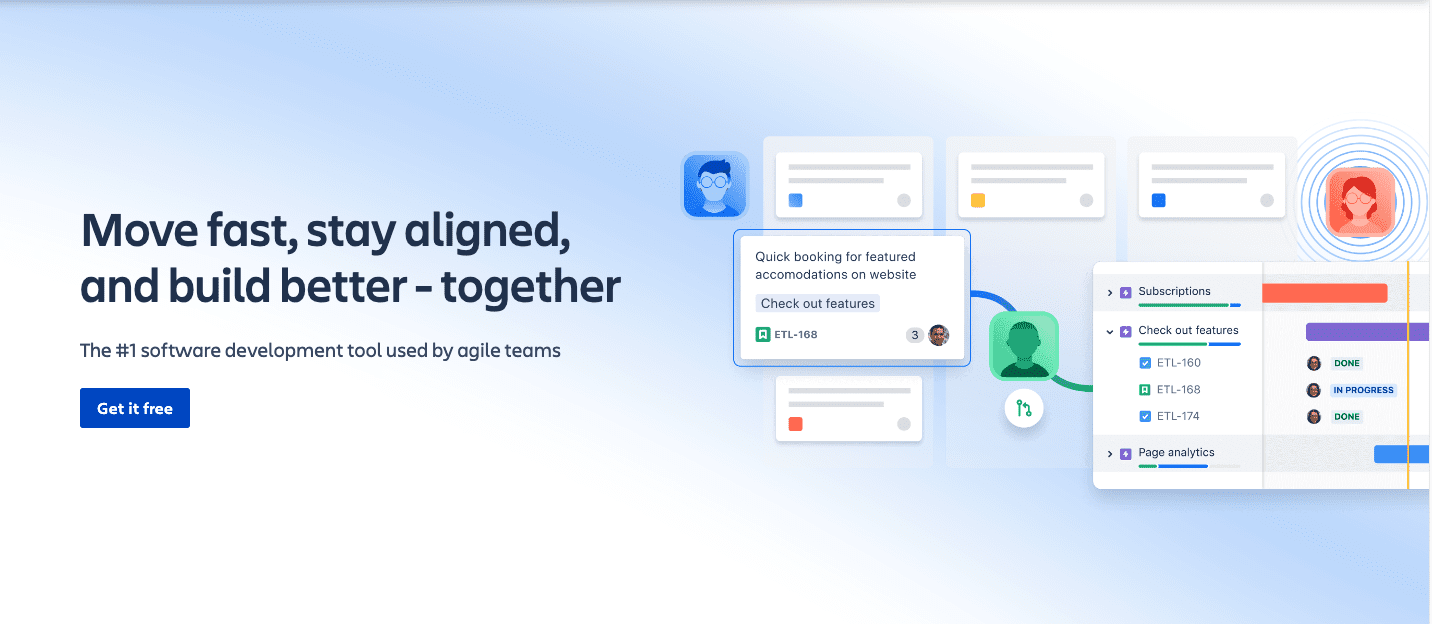
Jira remains the established standard for engineering task tracking and agile process management. The platform supports sprint planning, backlog prioritization, and issue resolution with customizable workflows. Engineering leaders monitor velocity trends, identify throughput constraints, and forecast completion timelines through built-in analytics.
Jira’s extensive configuration options include custom fields, automation rules, and permission hierarchies. Native support for scrum and kanban frameworks has sustained its position in development-centric organizations.
4. Slack — Synchronous team coordination
Slack structures team communication through channel-based messaging, reducing reliance on email for operational updates. Product teams coordinate across functions, share contextual information, and maintain project awareness without excessive meeting overhead.
Integration capabilities surface notifications from connected tools—deployment events from GitHub, design revisions from Figma, roadmap adjustments from planning systems. Searchable message history generates a referenceable decision archive.
Strengths:
- Channel organization maintains conversation focus by project or topic
- Extensive integration marketplace connects operational tools into unified notification streams
- Search functionality preserves decision rationale for future reference
Considerations:
- Large organizations with numerous channels risk notification saturation
- Critical decisions captured in chat may require explicit documentation in permanent systems
5. Miro — Visual collaboration environment
Miro provides digital whiteboarding for structured ideation, user story mapping, design sprints, and strategic workshops. Product teams visualize feature concepts, map customer journeys, and align stakeholders through shared visual canvases.
The platform’s template library accelerates common facilitation patterns, while real-time collaboration enables distributed participation in previously location-dependent activities.

6. Google Drive — Document and asset management
Google Drive serves as a centralized repository for product documentation, specifications, and shared assets. Version history, access controls, and real-time co-editing support collaborative document development without file synchronization conflicts.
Integration with Google Workspace applications enables seamless transitions between document types—spreadsheets for resource tracking, documents for requirements, presentations for stakeholder updates.
7. Zendesk — Customer feedback aggregation
Zendesk captures and organizes customer interactions, support tickets, and product feedback into structured data. Product teams analyze support patterns, identify recurring issues, and prioritize enhancements based on verified customer impact rather than internal assumptions.
The platform’s tagging and reporting capabilities enable quantitative analysis of qualitative feedback, supporting evidence-based roadmap decisions.
8. Figma — Design and prototype development
Figma unifies interface design, prototyping, and design system management in a browser-based environment. Product teams iterate on visual concepts, conduct usability testing with interactive prototypes, and maintain component libraries that ensure consistency across products.
Real-time collaboration eliminates version control challenges that previously complicated design workflows, while developer handoff features reduce translation errors between design and implementation.
9. Optimizely — Experimentation and validation
Optimizely supports controlled experimentation through A/B testing, feature flagging, and multivariate analysis. Product teams validate hypotheses, measure feature impact, and reduce risk in release decisions through statistical evidence.
The platform’s targeting capabilities enable segment-specific experiments, supporting personalized experiences without separate code deployments.
10. Typeform — Structured customer research
Typeform facilitates survey creation and response collection with an interface designed for engagement. Product teams gather quantitative feedback, conduct market research, and validate assumptions through formatted questionnaires.
Conditional logic and integration options enable sophisticated research flows that adapt to respondent inputs and feed results directly into analysis tools.
11. Snowflake — Data and analytics infrastructure
Snowflake provides cloud-native data warehousing for product analytics at scale. Product teams consolidate usage data, performance metrics, and business intelligence into queryable structures that support complex analysis.
The platform’s separation of storage and compute enables cost-efficient scaling, while native support for diverse data formats reduces preprocessing requirements.
12. Azure DevOps — Development and operations integration
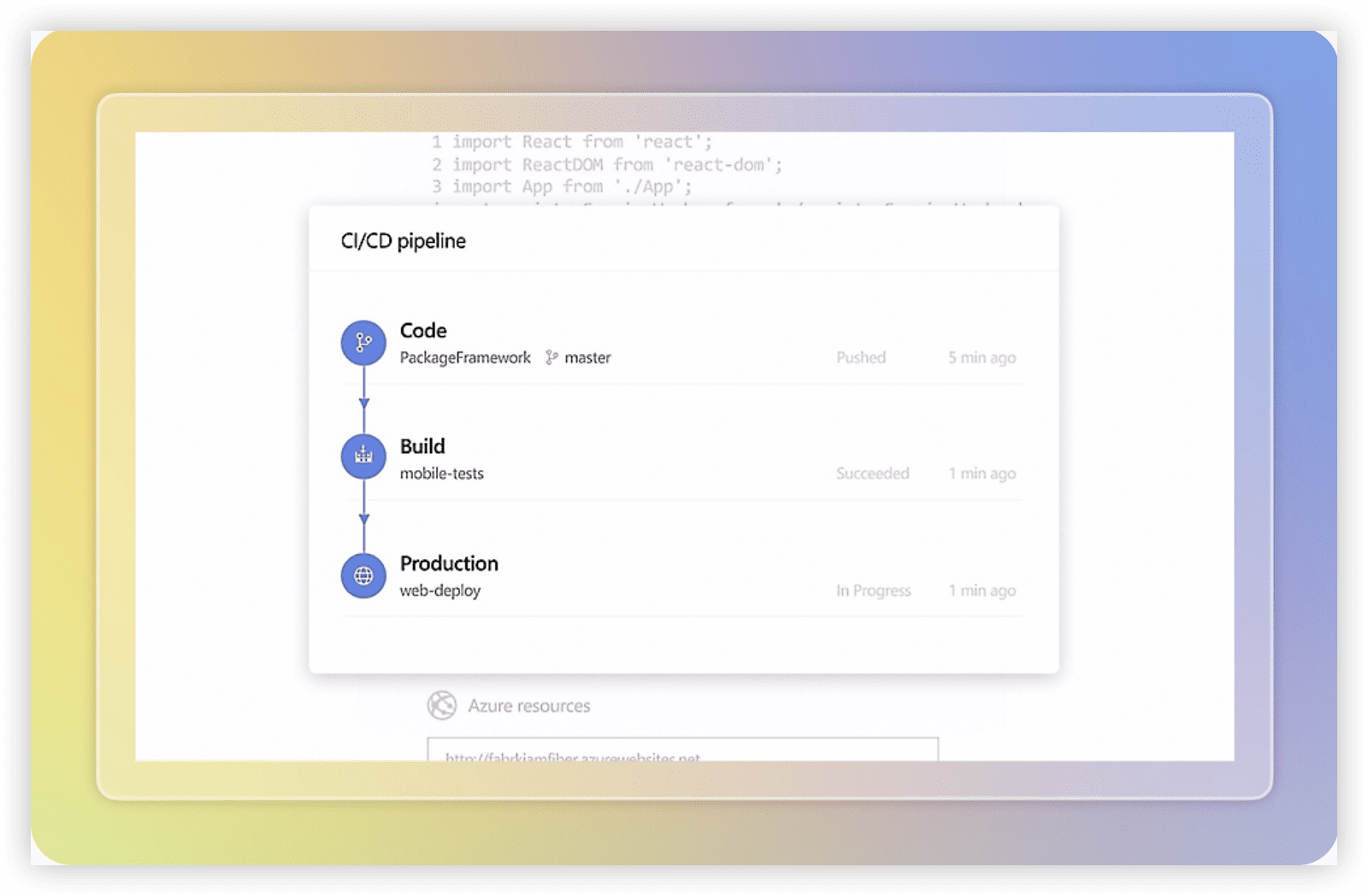
Azure DevOps connects version control, build automation, release management, and test planning within Microsoft’s ecosystem. Organizations with existing Microsoft investments benefit from unified identity management and service integration.
The platform supports both cloud-hosted and self-hosted configurations, accommodating organizations with specific compliance or latency requirements.
13. Salesforce — CRM data integration
Salesforce centralizes customer relationship data that informs product strategy. Product teams access sales pipeline information, customer segmentation, and opportunity history to align roadmap priorities with revenue potential and market demand.
Custom object models and API accessibility enable extension beyond standard CRM patterns, supporting product-specific data structures.
14. Gong — Conversation intelligence
Gong records, transcribes, and analyzes sales and customer conversations. Product teams access direct customer language, objection patterns, and feature requests without relying on secondhand summaries.
AI-powered analysis identifies recurring themes and sentiment trends across conversation volumes that would resist manual review.
15. GitHub — Code collaboration and version control
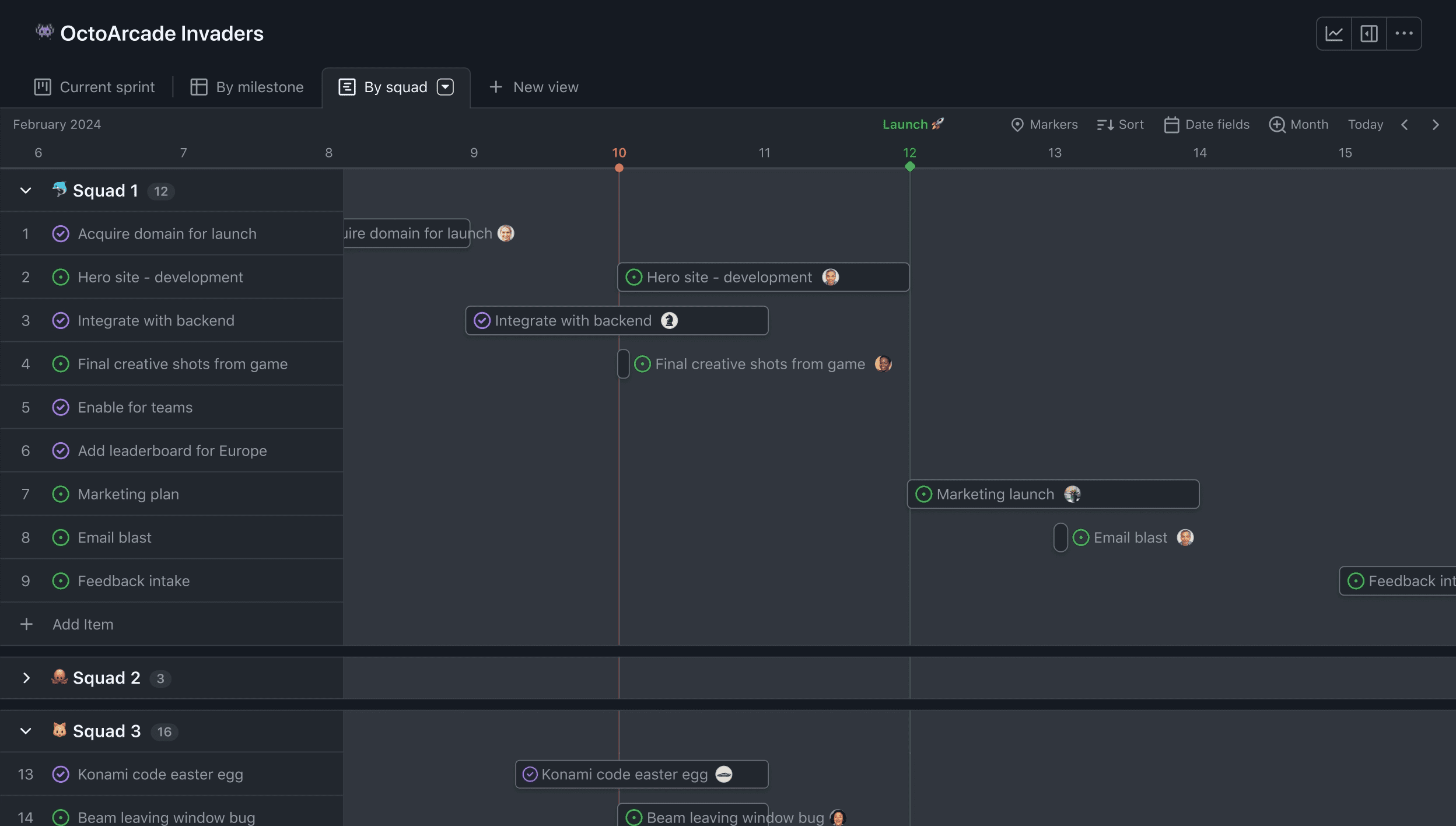
GitHub provides distributed version control, code review workflows, and repository management for development teams. Product managers track implementation progress, review technical proposals, and coordinate releases through pull request and issue tracking integration.
GitHub Actions extends the platform into continuous integration and deployment automation, reducing separate tooling for build and release processes.
Product management tools comparison: selection framework
Evaluating tools requires alignment between organizational needs and solution capabilities. The following dimensions provide a structured assessment approach:
| Dimension | Assessment questions |
|---|---|
| Integration depth | Does the tool connect bidirectionally with existing systems, or require manual data transfer? |
| Scale accommodation | Does pricing and performance remain predictable as user count, data volume, or product complexity increases? |
| Workflow flexibility | Can the tool adapt to existing processes, or does it mandate specific methodologies? |
| Visibility granularity | Does the tool provide appropriate detail for individual contributors and summarized views for executives? |
| Governance support | Does the tool enforce necessary access controls, audit trails, and compliance requirements? |
Essential capabilities for product management tooling
Effective solutions typically include:
- Strategic alignment mechanisms: Connections between company objectives, portfolio priorities, and team deliverables
- Cross-functional coordination: Shared workspaces and notification systems that reduce communication latency
- Progress visibility: Status tracking, milestone reporting, and health indicators accessible to appropriate stakeholders
- Feedback integration: Channels for customer input, support data, and market signals to inform prioritization
- Analytics and measurement: Quantitative assessment of process efficiency, quality outcomes, and business impact
Selection criteria: matching tools to organizational context
Tool selection should reflect organizational maturity, team distribution, and technical environment:
Enterprise complexity: Organizations managing multiple product lines with interdependencies require portfolio-level visibility. Solutions like ONES and Airtable ProductCentral address this need through unified data architectures.
Team distribution: Geographically dispersed teams benefit from cloud-native solutions with strong asynchronous collaboration features. Browser-based tools reduce friction for remote participants.
Existing ecosystem: Integration costs often exceed licensing costs. Prioritize tools with established connectors to current systems, or platforms with accessible APIs for custom integration.
Regulatory environment: Industries with strict compliance requirements may need self-hosted or region-specific deployment options. Verify data residency and security certification status.
Methodological diversity: Organizations with teams using different frameworks—scrum, kanban, shape up—require configurable tools rather than methodology-specific solutions.
Additional tools for specialized requirements
Beyond the core 15, organizations may consider specialized solutions for specific contexts:
- Linear: Streamlined issue tracking for smaller engineering teams prioritizing speed over customization
- Notion: Flexible documentation and wiki platforms for knowledge management
- Amplitude: Product analytics focused on user behavior and retention analysis
- LaunchDarkly: Feature management and progressive delivery for controlled rollouts
- Productboard: Feedback aggregation and prioritization for customer-centric roadmapping
Why integrated platforms excel for enterprise product management
Point solutions deliver depth in specific functions but create integration burden and data fragmentation. Platforms that unify multiple capabilities—particularly ONES for enterprise R&D and Airtable ProductCentral for portfolio management—reduce the architectural complexity of maintaining consistent information across tools.
The relational data model in unified platforms ensures that updates propagate automatically across connected views. A requirement change reflects immediately in roadmap visualizations, resource allocations, and status reports without manual reconciliation. This consistency reduces coordination overhead and enables faster, more confident decision-making.
For organizations where engineering effectiveness measurement is a strategic priority, ONES provides built-in analytics frameworks that baseline current performance and track improvement initiatives. The platform’s emphasis on data-driven refinement distinguishes it from tools that merely record activity without enabling systematic analysis.
Frequently asked questions
How many tools does a product team typically need?
Most effective product organizations operate with 5–8 core tools that cover portfolio planning, development tracking, design, communication, and customer feedback. Tool proliferation beyond this range typically indicates integration gaps rather than genuine capability needs.
Should small teams adopt enterprise-focused platforms?
Early-stage teams benefit from starting with simpler solutions and migrating as complexity increases. However, teams with predictable growth trajectories may invest earlier in scalable platforms to avoid painful migration later.
How important is native integration versus third-party connectors?
Native integrations typically offer more reliable data synchronization and better support escalation paths. Third-party connectors suffice for less critical data flows, but core operational integrations warrant platform-native solutions.
What role should AI play in tool selection for 2026?
AI capabilities should be evaluated for specific utility rather than general presence. Effective applications include automated insight surfacing from large datasets, routine task automation, and predictive analytics for resource planning. Avoid tools where AI functions as marketing positioning without measurable workflow improvement.
How frequently should organizations reassess their tooling?
Annual comprehensive reviews align with typical vendor contract cycles. Between reviews, maintain awareness of emerging solutions through peer networks and industry analysis, but resist frequent changes that disrupt team productivity.
Conclusion
The product management tool landscape in 2026 offers substantial capability for organizations willing to invest in thoughtful selection and implementation. The 15 tools examined here—led by ONES for enterprise R&D management and Airtable ProductCentral for portfolio orchestration—represent proven options across the product lifecycle.
Effective tool strategy emphasizes integration quality over feature quantity. Organizations that build connected ecosystems around clear data models and defined workflows will outperform those accumulating disconnected point solutions. The selection framework and evaluation criteria provided here support deliberate, context-appropriate decisions that serve teams through growth and methodological evolution.