400-188-1518
8 Best Confluence Alternatives for Enterprise Teams in 2026
If you’re evaluating alternatives to Confluence for 2026, this guide examines eight platforms that connect documentation to execution. The tools covered are: 1. ONES, 2. monday.com, 3. Notion, 4. Confluence (for comparison), 5. Coda, 6. ClickUp, 7. Asana, and 8. Document360. Each offers distinct approaches to unifying knowledge management with operational workflows.
Why Documentation Alone No Longer Serves Modern Organizations
Static repositories of information have become liabilities. When strategy lives in one system and execution occurs elsewhere, teams lose context during handoffs, updates lag behind reality, and cross-functional initiatives fragment across disconnected tools.
The operational cost of this separation compounds. A product team documents requirements in a wiki; engineering tracks sprints in another platform; leadership receives status updates through yet another channel. No participant possesses a complete, current view of progress. Duplicated effort, missed dependencies, and delayed decisions follow predictably.
Forward-looking organizations are shifting toward environments where knowledge and action coexist. Documentation embedded within workflows remains current because it evolves with the work itself. Plans, ownership, timelines, and progress move as an integrated system rather than isolated artifacts.
Critical Capabilities for 2026
Evaluating alternatives requires looking beyond basic wiki functionality. The distinction between simple documentation tools and enterprise-grade platforms lies in several operational dimensions:
Workflow Integration
Documentation should function as a starting point for execution, not merely a reference. Platforms must support customizable templates, automated routing between stakeholders, and dependency visualization across teams.
Intelligent Automation
AI capabilities should address operational friction: automatic categorization of incoming requests, extraction of structured data from unstructured sources, and generation of concise summaries for leadership consumption.
Governance at Scale
Enterprise deployment demands granular access controls, encryption standards for data at rest and in transit, and comprehensive audit trails for compliance requirements.
Ecosystem Connectivity
Native integrations with communication platforms, development environments, CRM systems, and business intelligence tools prevent information silos. Two-way synchronization ensures consistency across the technology stack.
Platform Evaluations
1. ONES
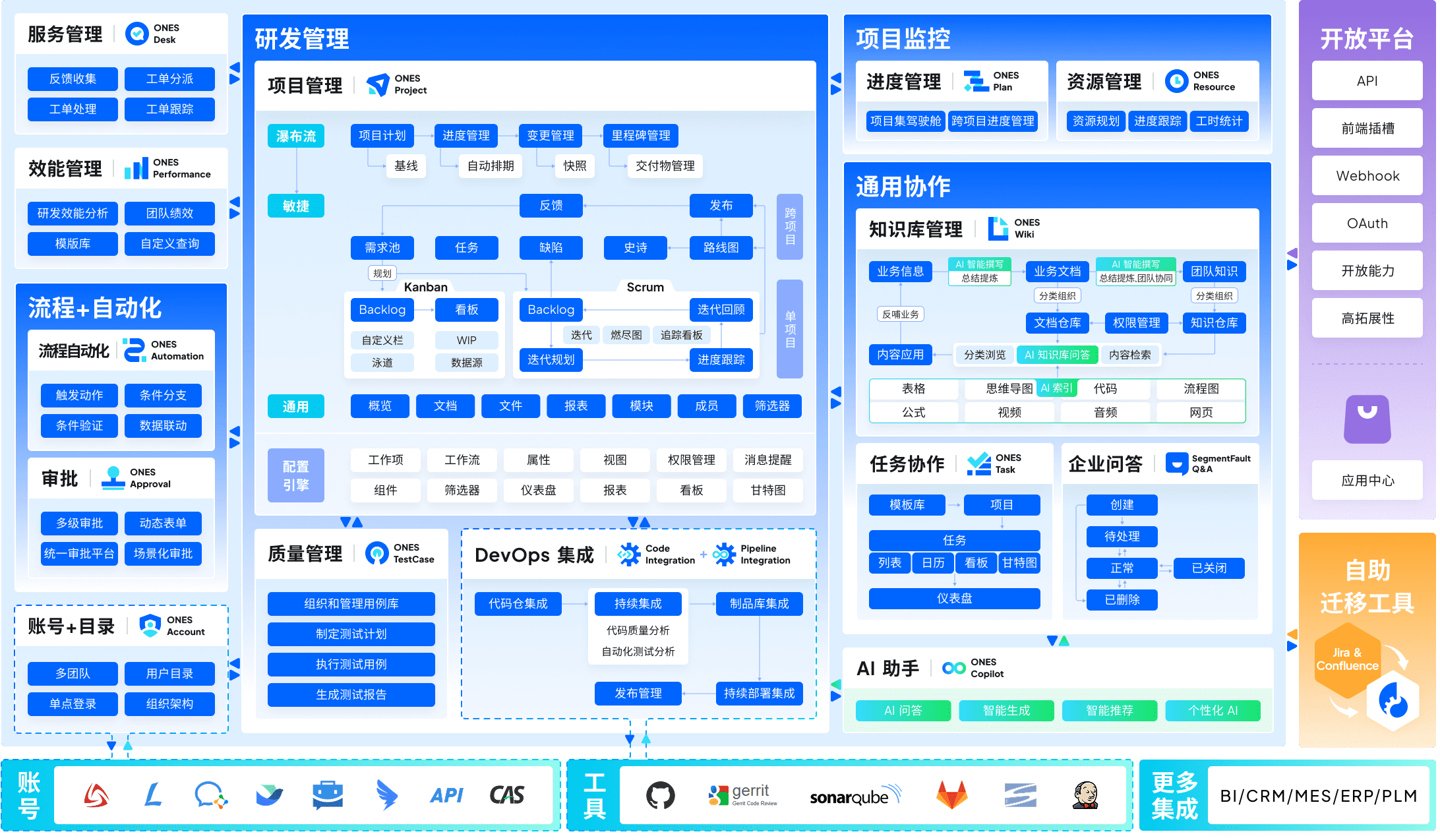
ONES occupies a distinctive position as an enterprise-grade research and development management platform designed for complex organizational structures. Its architecture addresses a persistent challenge in large-scale technical environments: the fragmentation caused by stitching together specialized point solutions.
The platform integrates project management, requirements definition, knowledge repositories, test management, CI/CD pipelines, and source code governance within a unified environment. This consolidation reduces the cognitive and operational overhead of context-switching between disparate tools.
For organizations with intricate process requirements, ONES provides configurable workflow engines, sophisticated permission models, and cross-team coordination mechanisms. The platform emphasizes measurable improvement in delivery performance through built-in analytics that track velocity, quality metrics, and cycle times.
Primary use cases: Enterprise software development organizations, large-scale product engineering teams, and institutions requiring unified governance across multiple R&D streams.
Differentiating characteristics: Native integration of the complete development lifecycle; configurable governance for multi-team coordination; data-driven improvement frameworks for engineering effectiveness.
2. monday.com
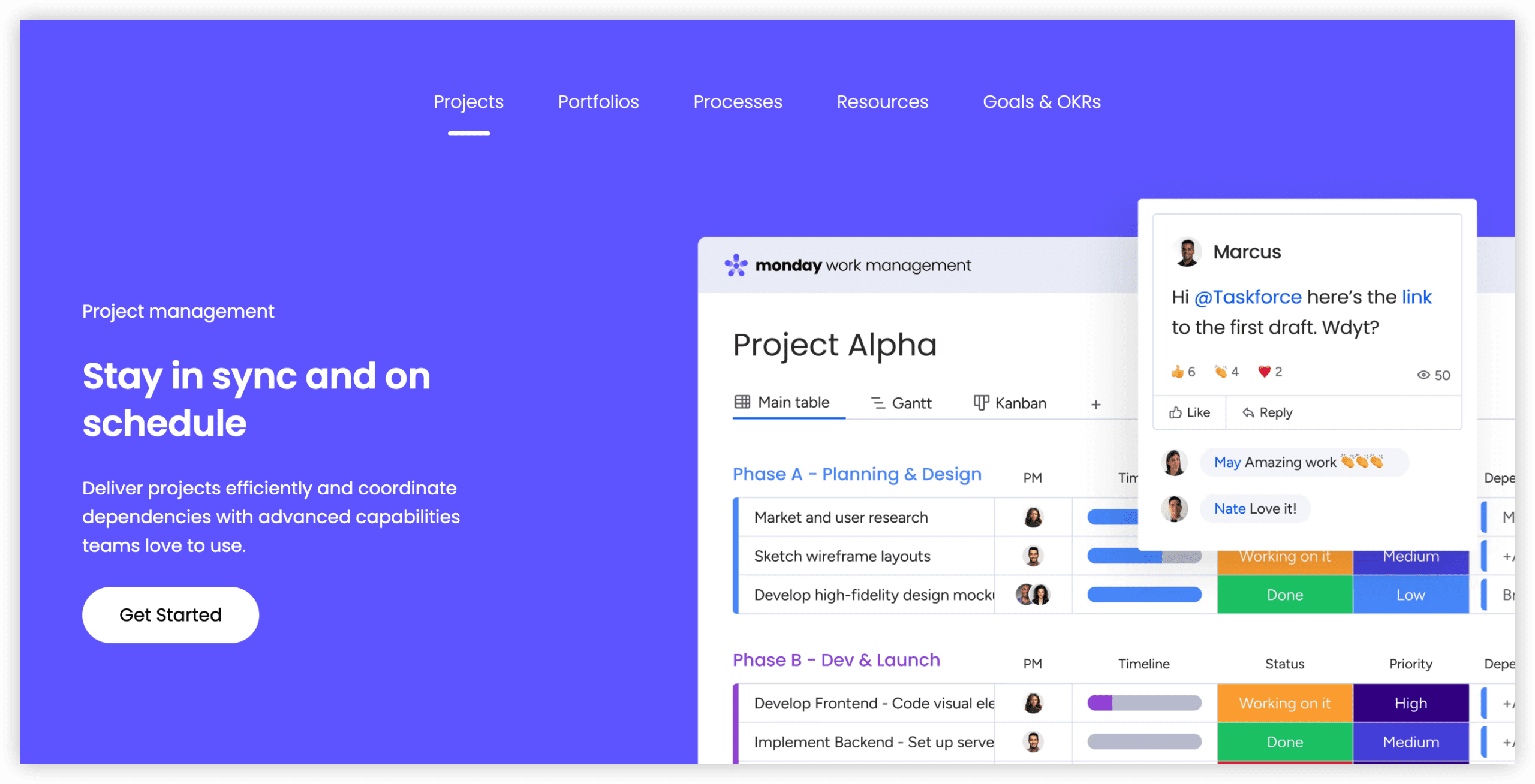
monday.com repositions documentation as operational material rather than archival content. Project specifications, decisions, and status updates remain tethered to active work through visual boards, timelines, and portfolio dashboards.
The platform serves program management offices seeking to standardize intake processes, track delivery across initiatives, and maintain executive visibility without manual consolidation. Teams preserve technical context in embedded documents while managing execution through configurable views including Kanban, Gantt, and workload distributions.
AI capabilities include modular blocks for categorization, information extraction, sentiment detection, and summarization. These can be deployed through column configurations, automation triggers, or manual invocation. An emerging Digital Workforce feature introduces autonomous monitoring agents that identify bottlenecks proactively.
Automation infrastructure operates on a no-code foundation with templated recipes and custom logic construction. Integration support encompasses 200+ native connections including bi-directional Jira synchronization and standard enterprise communication tools.
Pricing structure: Free tier for limited seats; Basic at $9/seat/month; Standard at $12/seat/month with expanded views and automation quotas; Pro at $19/seat/month with advanced tracking and increased automation capacity; Enterprise tier with custom pricing for portfolio and resource management capabilities.
3. Notion
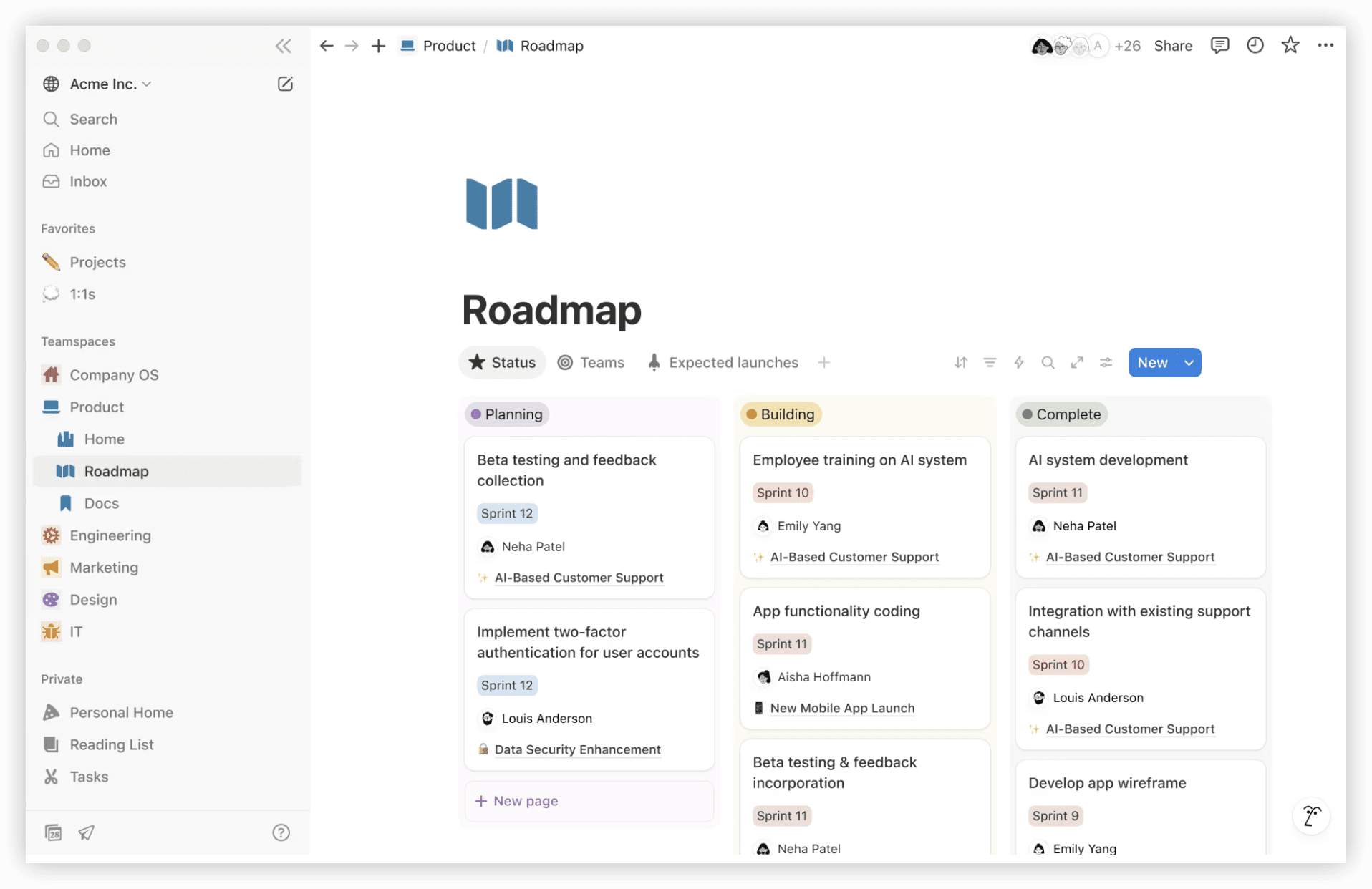
Notion’s block-based architecture provides exceptional flexibility for teams prioritizing information architecture control. Documentation, databases, and lightweight project management converge in a customizable canvas that adapts to diverse operational patterns.
The platform attracts organizations where content structure itself constitutes a competitive advantage—research teams, creative agencies, and knowledge-intensive operations requiring non-standardized arrangements. Database functionality enables relational information modeling without traditional database administration overhead.
AI assistance focuses on content generation, translation, and summarization within the editing environment. Integration breadth continues expanding though enterprise connectivity may require additional configuration compared to platforms with deeper native ecosystem investments.
Primary use cases: Teams with evolving or unconventional workflow requirements; organizations where documentation and data management require tight coupling; groups prioritizing aesthetic and structural customization.
4. Confluence (Reference Baseline)
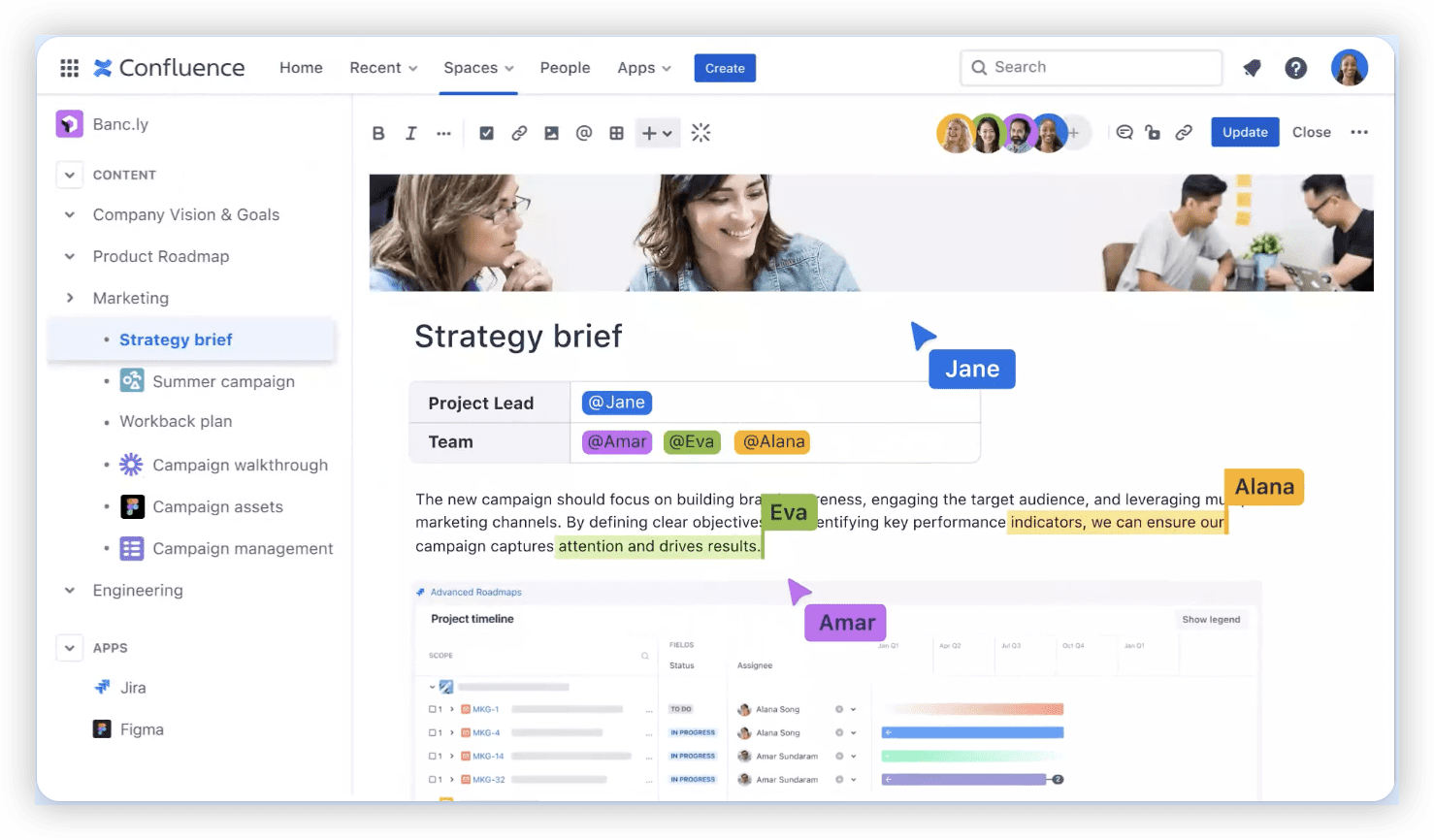
Atlassian’s Confluence remains the established standard for team documentation, particularly within organizations already invested in the Atlassian ecosystem. Deep Jira integration preserves traceability between specifications and implementation work.
Limitations prompting evaluation include: static page orientation that separates knowledge from execution; navigation complexity at enterprise scale; and dependency on complementary Atlassian products for workflow automation. Organizations seeking unified work management frequently encounter integration gaps requiring additional tooling.
Current positioning: Suitable for documentation-centric requirements within Jira-dependent environments; less optimal for organizations seeking consolidated operational platforms.
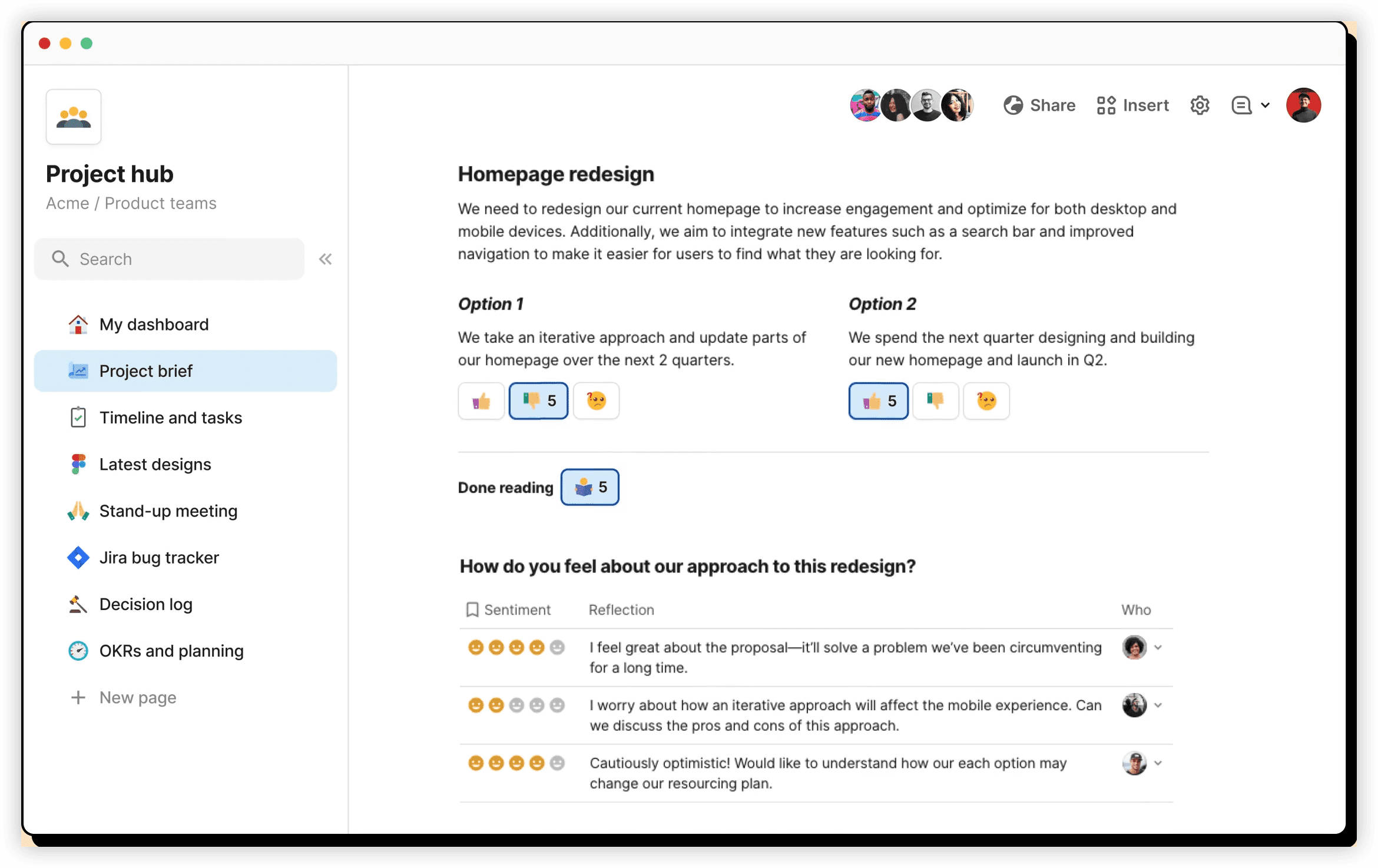
5. Coda
Coda treats documents as applications. Tables within pages function as databases with programmable logic, enabling progressive transformation from static documentation to interactive operational tools.
The platform suits teams that begin with collaborative documents and gradually introduce structured tracking, voting mechanisms, or automated notifications without migrating to separate systems. Formula language provides spreadsheet-like computation within narrative contexts.
Primary use cases: Teams with evolving process maturity; organizations where documents frequently become operational tools; groups comfortable with light technical configuration.
6. ClickUp
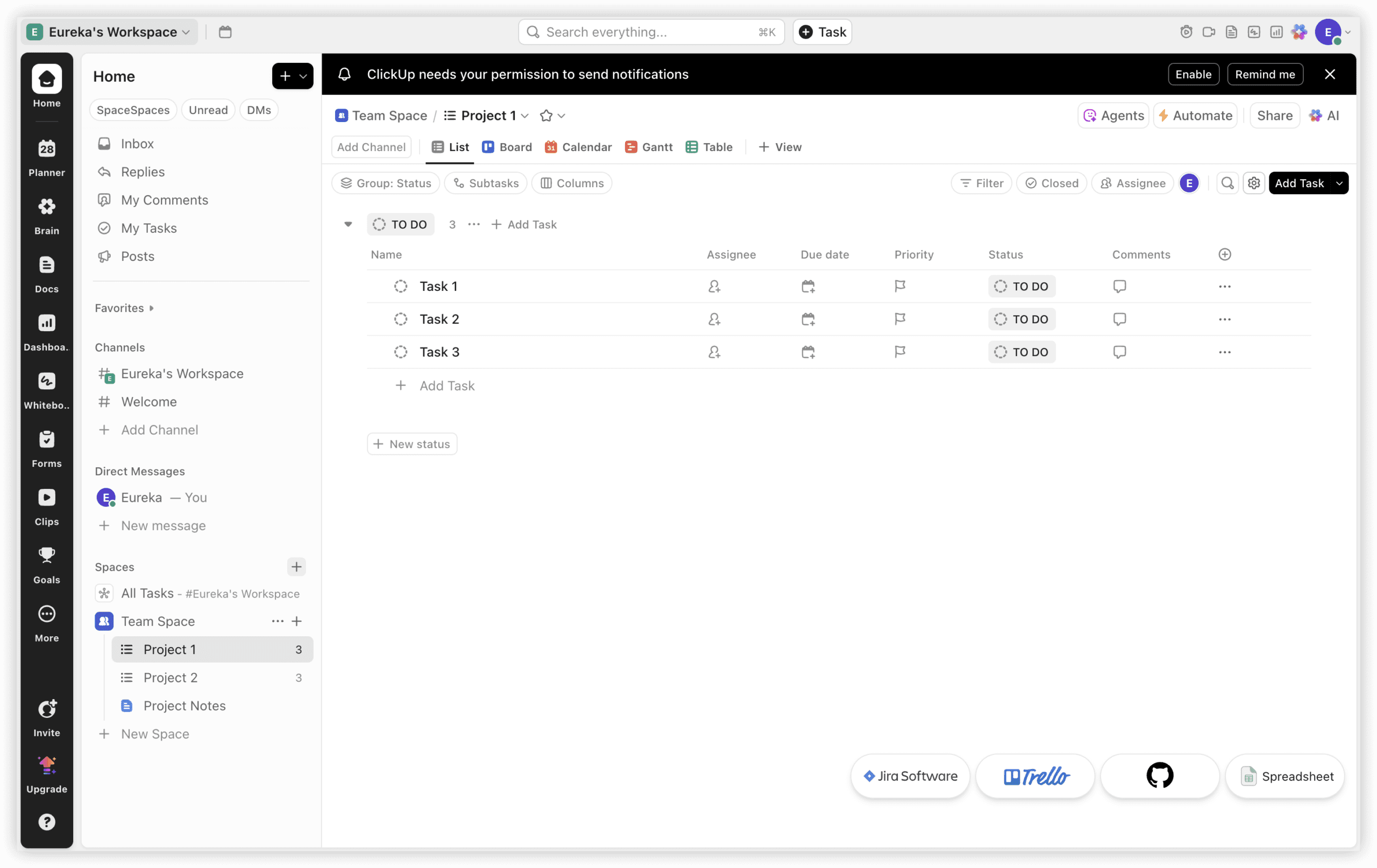
ClickUp pursues comprehensive feature consolidation, offering documentation alongside task management, time tracking, goal setting, and whiteboarding. The breadth appeals to organizations seeking to minimize tool proliferation.
Documentation exists within a hierarchical structure of spaces, folders, and lists, with embedding capabilities for live task references. AI assistant supports writing, summarization, and translation functions.
Considerations include interface density that may overwhelm teams with focused requirements, and the learning curve associated with extensive configurability.
Primary use cases: Small to medium organizations preferring consolidated tooling; teams with varied functional needs and limited budget for multiple specialized platforms.
7. Asana
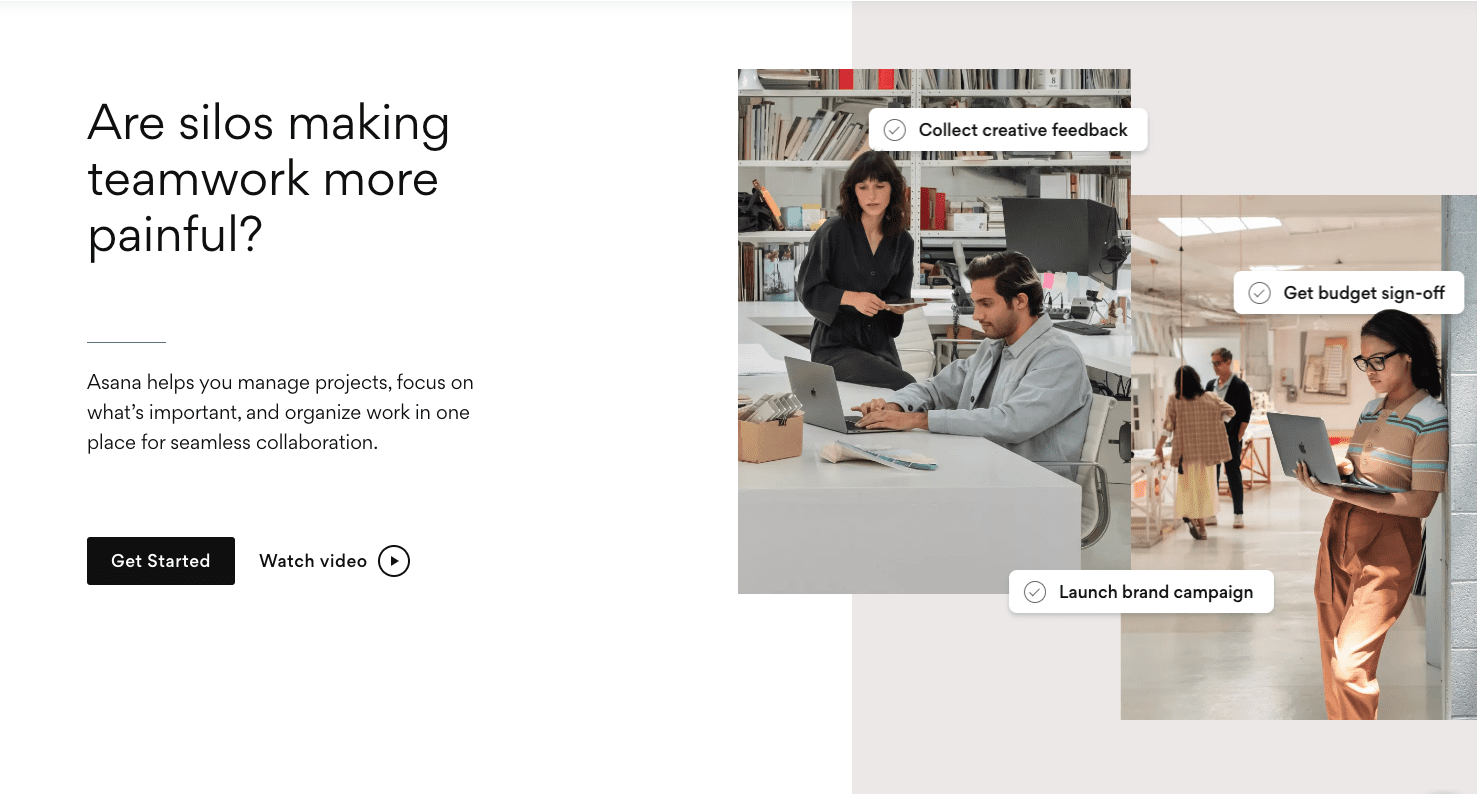
Asana emphasizes clarity in work coordination, with documentation serving project execution rather than existing independently. Project briefs, status updates, and goal documentation integrate directly into task hierarchies.
The platform excels for teams where work definition and assignment clarity matter more than free-form knowledge accumulation. Reporting and portfolio views provide leadership visibility without manual status compilation.
Primary use cases: Marketing, operations, and program teams with structured initiative patterns; organizations where task accountability and timeline clarity take precedence over open-ended documentation.
8. Document360
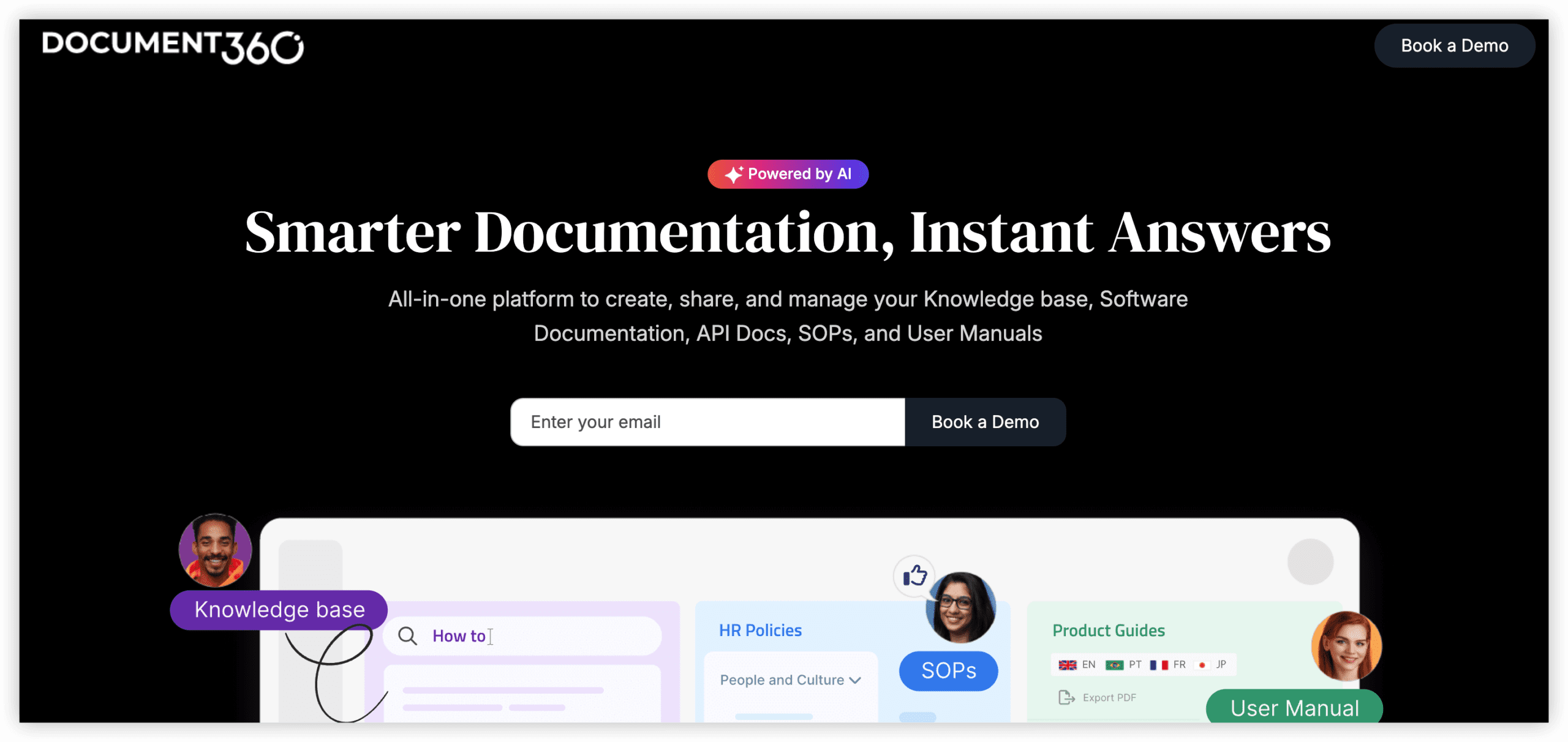
Document360 specializes in customer-facing and internal knowledge bases with robust content management capabilities. Version control, categorization, and search optimization support documentation at scale.
The platform differentiates through dedicated knowledge base functionality rather than general work management. Analytics on article performance, user feedback integration, and multi-language support serve documentation teams with publication requirements.
Primary use cases: Technical writing teams, customer support organizations, and enterprises requiring standalone knowledge repositories with sophisticated content lifecycle management.
Selection Framework for 2026
Platform selection should follow structured evaluation rather than feature comparison alone. Consider these dimensions in sequence:
Organizational scale and complexity: Large engineering organizations with multi-layer governance should prioritize ONES for its unified R&D lifecycle and cross-team coordination mechanisms. Mid-size operational teams may find monday.com or Asana more immediately accessible.
Documentation versus execution balance: Teams where knowledge creation is the primary activity should examine Notion or Document360. Organizations needing documentation to drive action should evaluate monday.com, ONES, or Asana.
Technical ecosystem integration: Existing Atlassian investments may justify Confluence retention despite limitations. Microsoft-centric environments should verify Teams, SharePoint, and Azure DevOps connectivity. Development-focused organizations should assess Jira integration depth and bi-directional synchronization quality.
Governance requirements: Regulated industries and enterprises with strict compliance mandates should verify audit trail completeness, data residency options, and access control granularity. ONES and monday.com offer enterprise-grade foundations; smaller platforms may require additional configuration.
Adoption trajectory: Platforms with extensive configurability (Notion, ClickUp) deliver long-term flexibility at the cost of initial setup investment. More opinionated structures (Asana, Document360) enable faster deployment with reduced customization scope.
Implementation Considerations
Migration from Confluence or similar platforms requires attention beyond technical transfer. Content audit and rationalization should precede migration—obsolete material consumes attention and degrades search effectiveness. Information architecture should be redesigned for the target platform’s structural assumptions rather than replicating Confluence’s hierarchy.
Adoption success depends on identifying workflow champions who demonstrate integrated usage before broad rollout. Documentation that remains disconnected from daily execution will revert to static reference status regardless of platform capabilities.
Training investment should emphasize operational integration rather than feature enumeration. Teams need to understand how documentation connects to their specific workflows, not merely how to create pages.
Frequently Asked Questions
What distinguishes enterprise-grade documentation platforms from basic wiki tools?
Enterprise platforms provide governance controls, ecosystem integration, workflow automation, and analytics that scale across organizational boundaries. Basic wikis offer collaborative editing without operational connectivity.
How should organizations prioritize between feature breadth and integration depth?
Organizations with established best-of-breed toolchains should prioritize integration depth to preserve existing investments. Teams seeking to reduce tool proliferation may accept moderate integration limitations for consolidation benefits.
What migration risks require advance planning?
Content fidelity during format translation, permission model mapping between systems, and URL preservation for external references constitute primary technical risks. Organizational risks include productivity disruption during adoption and abandonment of migrated content if integration with daily workflows fails.
How does AI capability differ across evaluated platforms?
AI implementations range from content generation assistance (Notion, ClickUp) to operational automation (monday.com AI Blocks, ONES analytics) and document processing (Coda formulas, Document360 search optimization). Evaluation should match AI functionality to specific operational pain points rather than treating AI as a uniform capability.
When should organizations consider maintaining Confluence alongside alternatives?
Hybrid configurations may persist during transition periods or where specific Atlassian ecosystem dependencies remain. Long-term dual-system maintenance typically indicates incomplete migration planning rather than optimal architecture.
Conclusion
The documentation platform market in 2026 presents genuine alternatives to Confluence’s archival model. Selection among these eight options requires honest assessment of organizational scale, workflow complexity, integration requirements, and governance needs.
For enterprise research and development organizations, ONES offers unified lifecycle management that addresses tool fragmentation at its root. For operational teams seeking to activate documentation within project execution, monday.com and Asana provide accessible entry points. For knowledge-centric teams prioritizing structural flexibility, Notion and Coda enable customized information architectures.
The essential criterion remains whether documentation connects to action. Platforms that embed knowledge within workflows, automate routine updates, and provide cross-functional visibility will outperform isolated repositories regardless of feature sophistication. The objective is not better documentation storage, but documentation that drives measurable operational improvement.