400-188-1518
7 Best Confluence Alternatives in 2026 for Teams Reconsidering Atlassian
Teams evaluating Confluence replacements in 2026 typically land on one of these seven platforms: ONES, Slite, Nuclino, Notion, GitBook, Coda (Superhuman Docs), and Outline. Each addresses different pain points—whether it’s escaping Atlassian’s pricing model, finding stronger AI search, or gaining control over data hosting.
This guide breaks down how each option compares across structure, pricing philosophy, and ideal use case, so you can match a tool to your team’s actual working patterns rather than migrating into another mismatch.
1. ONES
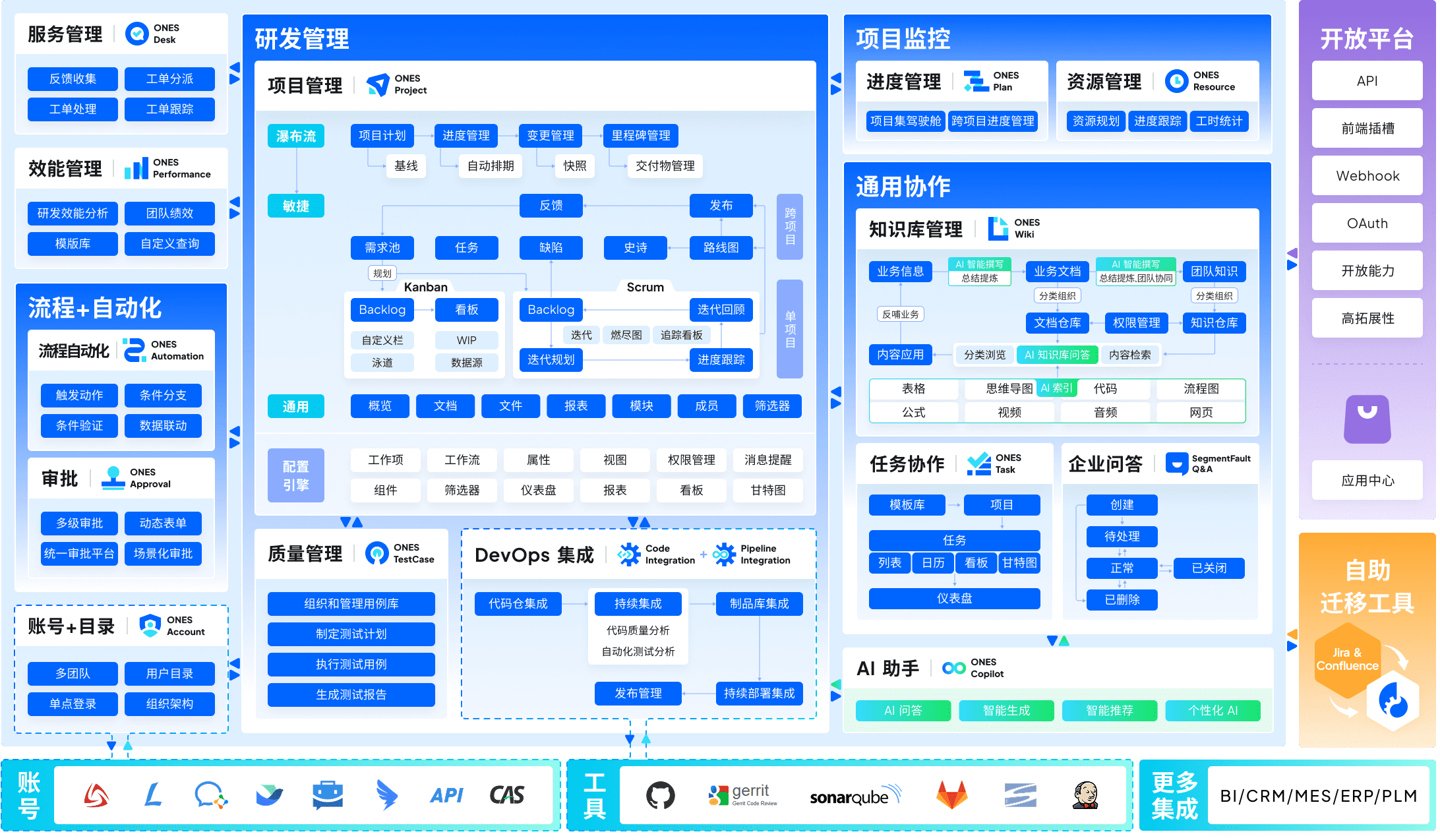
ONES is an enterprise-grade R&D management platform that unifies project management, requirements tracking, knowledge bases, test management, CI/CD pipelines, and code repositories under one architecture. For engineering organizations frustrated by tool fragmentation, it offers a deliberately integrated alternative to assembling separate wiki, project, and DevOps layers.
Where it diverges from Confluence: Confluence functions primarily as a document layer that sits adjacent to Jira; ONES treats documentation as one node within a continuous delivery pipeline. The platform supports sophisticated workflow configuration, granular permission governance, and cross-functional team coordination at scale. Its emphasis on engineering efficiency metrics—cycle time, defect escape rates, deployment frequency—gives leadership visibility that static wiki analytics cannot provide.
Best suited for: Mid-to-large engineering organizations (200+ technical staff) managing complex product portfolios across multiple teams, where tool consolidation and measurable delivery improvement outweigh the simplicity of a standalone wiki.
Pricing: Enterprise-tier pricing based on deployment scale and module selection; typically positioned above entry-level SaaS wiki tools, with cost offset by reduced integration overhead and consolidated vendor relationships.
2. Slite
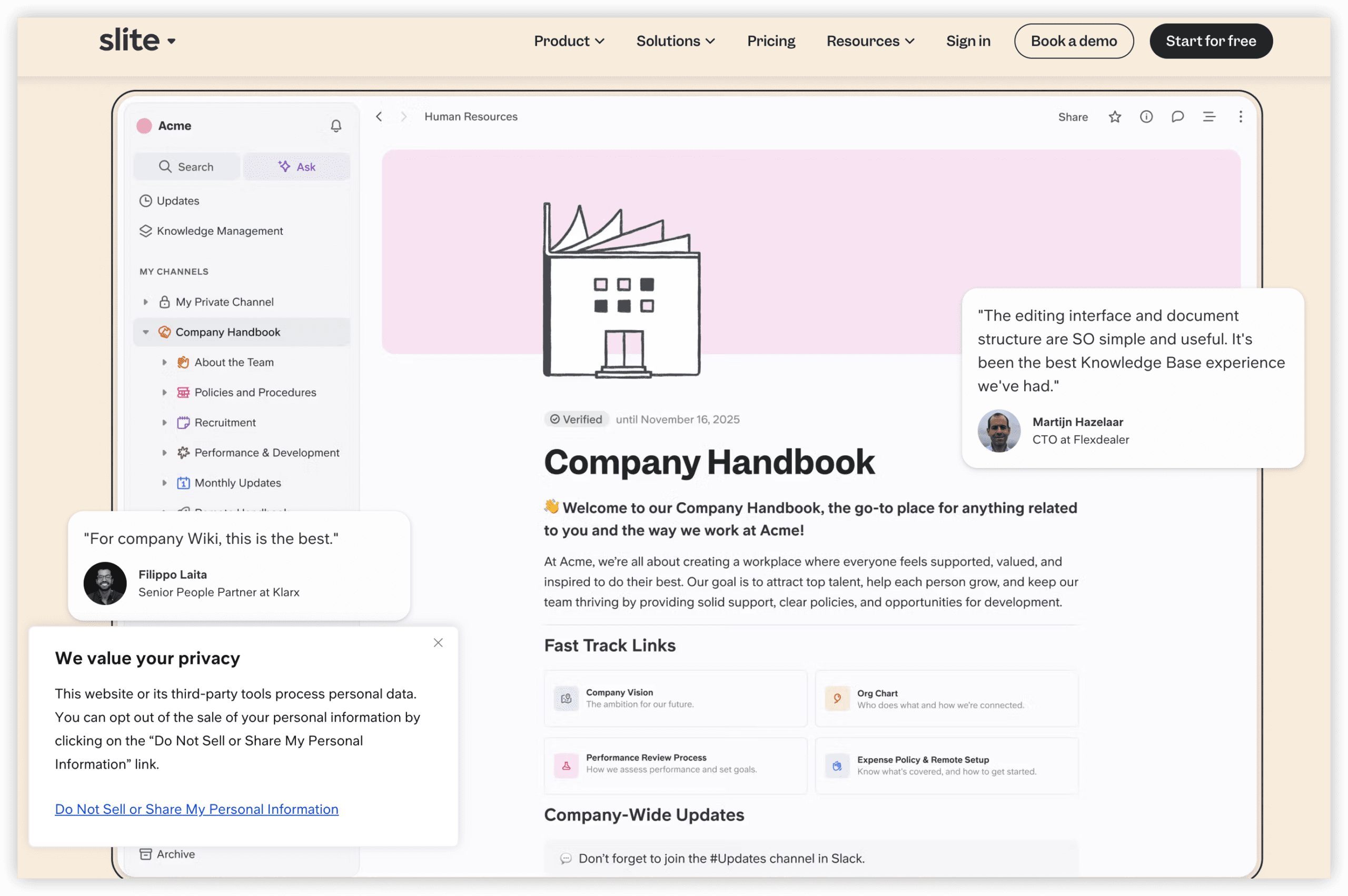
A team wiki engineered around two persistent complaints about Confluence: deteriorating search reliability and documentation decay. Its “Ask” feature generates cited answers from existing content, while verification workflows flag material that may have gone stale.
Where it diverges from Confluence: Slite adopts a constrained, opinionated design philosophy—no macro ecosystem to maintain, no plugin marketplace to govern. AI search ships at the entry paid tier rather than on a consumption-based credit system. The verification workflow directly confronts the trust erosion that accumulates in long-running knowledge bases.
Best suited for: Organizations where information retrieval accuracy and currency matter more than page-construction flexibility.
Pricing: Free tier for small groups; Standard at $8 per member monthly (includes AI Ask); Premium at $12.50 per member monthly adds API access and single sign-on.
3. Nuclino
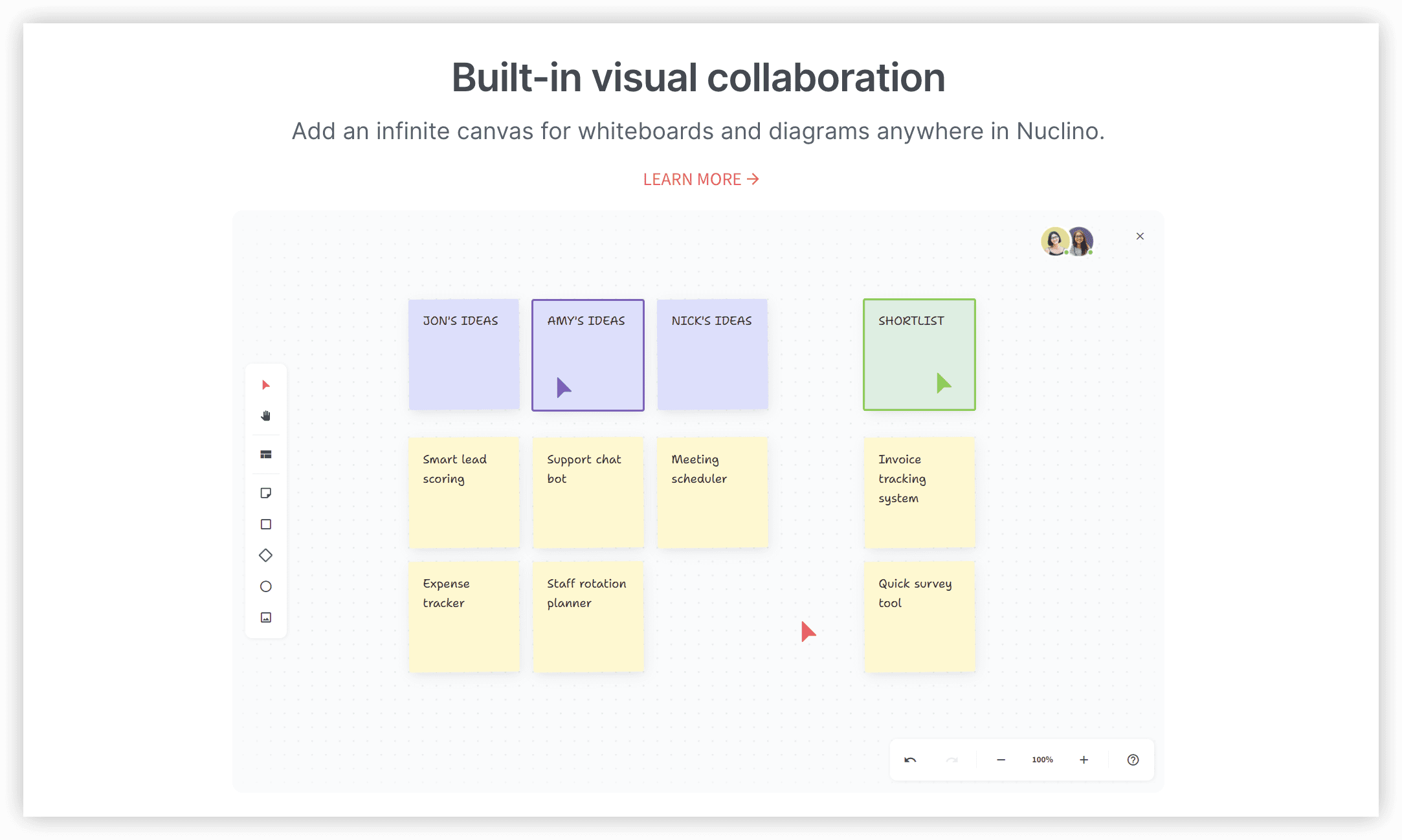
The migration destination for teams who find Confluence administratively overweight. Nuclino delivers rapid page creation, immediate search results, and multiple view modes (list, board, graph) without implementation friction.
Where it diverges from Confluence: Near-zero configuration burden, minimal administrative overhead, and performance that doesn’t degrade with scale within its intended range. It will not substitute for a full project management stack, but as an internal reference system for groups under fifty, it carries substantially less operational mass.
Best suited for: Small-to-medium teams requiring a functional internal wiki without platform administration as a secondary role.
Pricing: Free tier available; Starter at $6 per user monthly; Business at $10 per user monthly includes the Sidekick AI assistant.
4. Notion
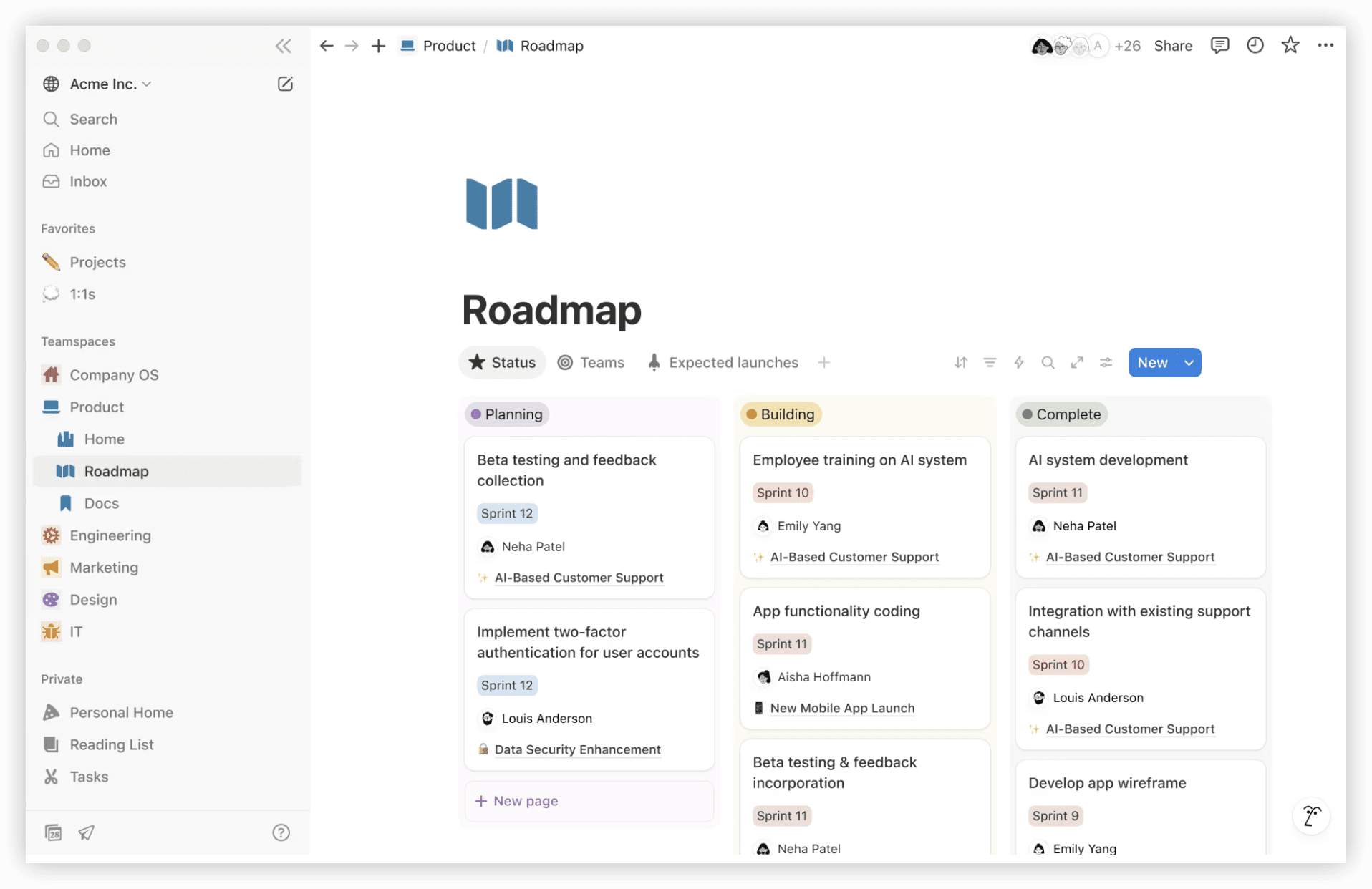
A block-based workspace that absorbs wiki, database, and lightweight application-building functions into unified pages. Its adoption breadth makes it the default comparison point for Confluence departures.
Where it diverges from Confluence: Structural plasticity—any page can shift between document, relational database, or interactive interface without changing tools. AI search attributes answers to source pages. The corresponding risk is sprawl: without disciplined template governance, workspaces accumulate redundant structures and inconsistent navigation.
Best suited for: Teams seeking one environment for documentation, knowledge management, and low-complexity project tracking.
Pricing: Free for individual use; Plus at $10 per member monthly; Business at $20 per member monthly (annual billing). Full AI capabilities and agent functionality require the Business tier.
5. GitBook
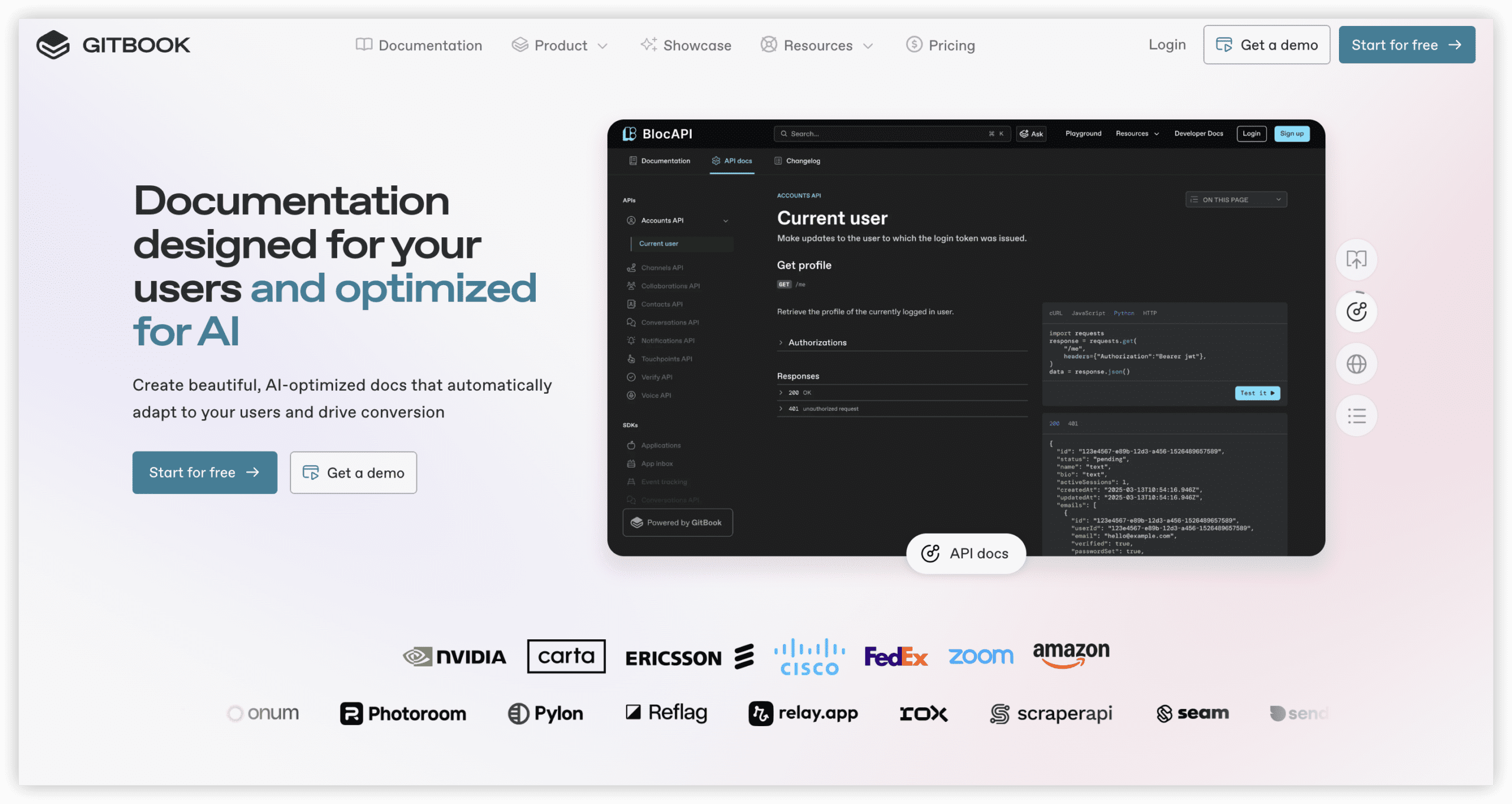
Documentation infrastructure purpose-built for technical audiences: API references, product documentation, and developer portals. Git-style branching and bidirectional GitHub synchronization keep documentation adjacent to code.
Where it diverges from Confluence: Version control semantics (branching, merge review, commit history) applied to documentation workflows. The billing model also differs materially: a base site fee plus per-user charges, which alters cost projections for organizations accustomed to pure seat-based pricing.
Best suited for: Engineering teams publishing technical documentation, maintaining API references, or operating developer-facing portals.
Pricing: Free for personal and open-source use; Premium from $65 per site monthly plus $12 per user; AI functionality requires the Ultimate tier.
6. Coda (Superhuman Docs)
A document environment that embeds tables, interactive controls, and automation logic within pages. Following acquisition by Superhuman’s parent organization, the product is transitioning to “Superhuman Docs” branding as of mid-2026, though pricing and core functionality remain stable. Its economic model is structurally unusual: only document creators incur charges.
Where it diverges from Confluence: The “makers pay, viewers free” structure inverts standard seat economics. A two-hundred-person organization with twenty document builders and one hundred eighty consumers pays for twenty seats—a direct counter to maximum-quantity billing. The tradeoff is elevated complexity: Coda documents can approximate lightweight applications, which demands more construction skill than conventional wikis.
Best suited for: Large organizations with concentrated authoring responsibilities and broad readership, or teams requiring interactive document behavior.
Pricing: Free tier; Team plan from $30 per maker monthly (annual billing). Viewers and non-creating editors incur no cost.
7. Outline
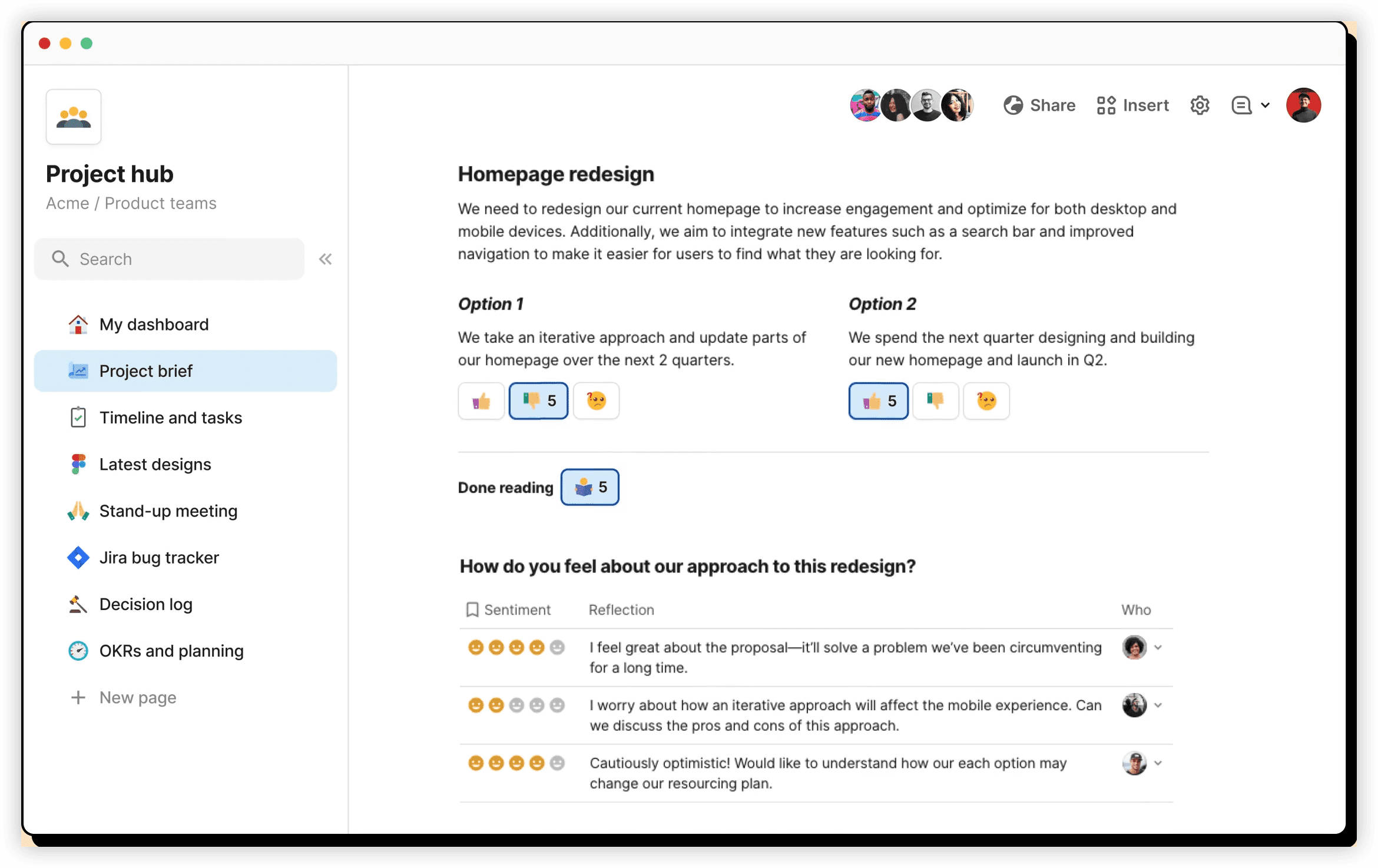
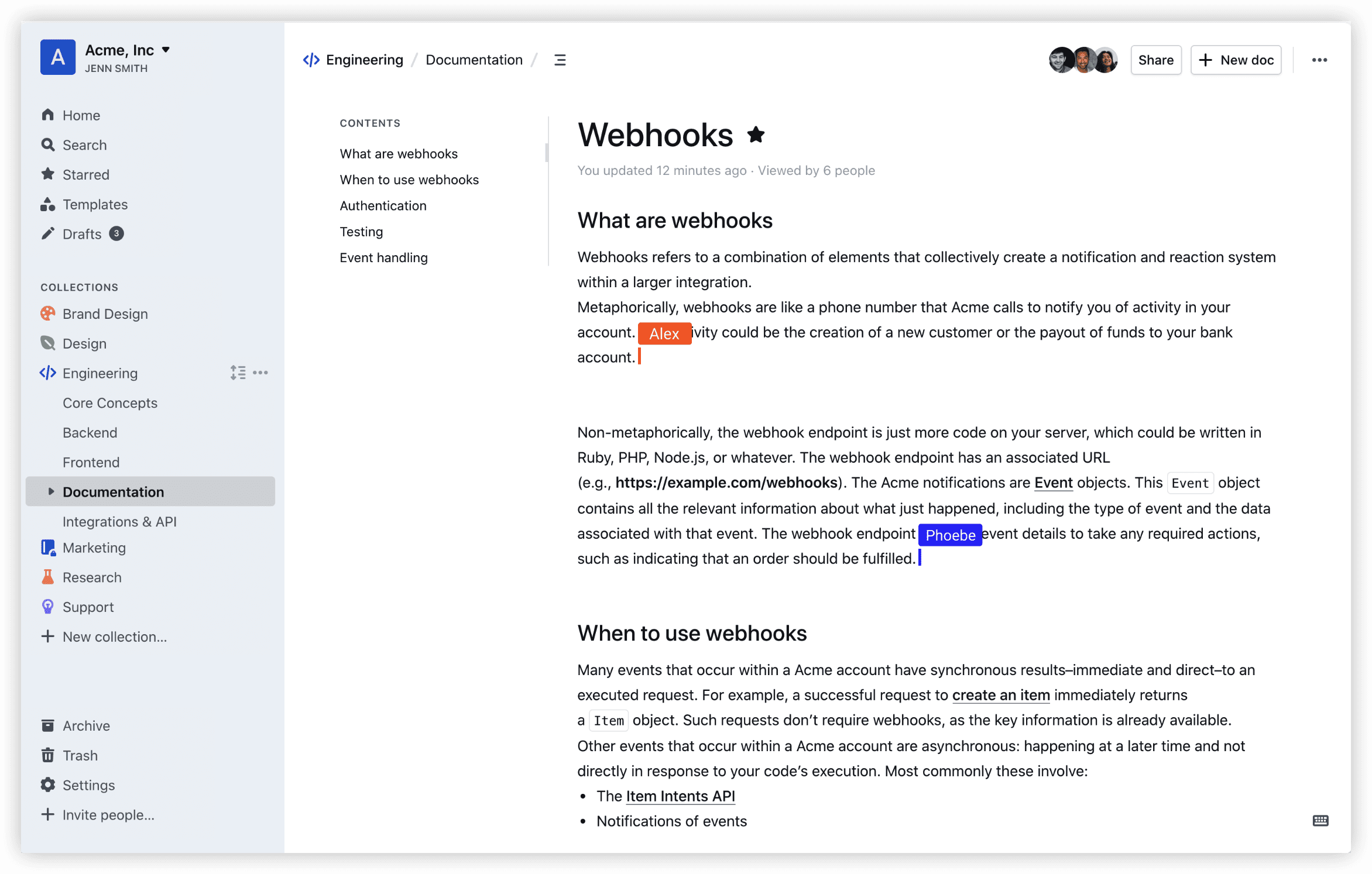
An open-source wiki with refined real-time editing and collaboration. Its defining structural feature is deployment flexibility: self-hosting is fully supported, enabling complete data sovereignty.
Where it diverges from Confluence: Source-available licensing permits self-hosted deployment at infrastructure cost alone—frequently under $15 monthly total—with no per-seat billing mechanism. This eliminates maximum-quantity billing exposure entirely. For teams without operational capacity, managed cloud hosting provides conventional per-user pricing. The scope is intentionally narrower than platform suites: wiki functionality only, not project orchestration.
Best suited for: Teams with technical operations capability who prioritize data ownership and predictable cost structure over integrated platform breadth.
Pricing: Self-hosted at no license cost (infrastructure only); Outline Cloud Team plan at $19 per user monthly.
Comparative Summary
| Platform | Primary Strength | AI Search | Self-Host Option | Entry Paid Price |
|---|---|---|---|---|
| ONES | Enterprise R&D integration | Integrated | Yes | Enterprise (custom) |
| Slite | Verified, searchable wiki | Ask (Standard tier) | No | $8/member/mo |
| Nuclino | Minimal overhead | Sidekick (Business) | No | $6/user/mo |
| Notion | Flexible all-in-one workspace | Business tier | No | $10/member/mo |
| GitBook | Developer documentation | Ultimate tier | No | $65/site + $12/user |
| Coda | Makers-pay economics | Included | No | $30/maker/mo |
| Outline | Data sovereignty | Limited | Yes | Free self-host / $19/user cloud |
Selection Guidance
The appropriate migration target depends on which Confluence limitation most constrains your operations:
- Escape Atlassian pricing mechanics: Outline (self-hosted), Coda (maker-based billing), or Nuclino (lower absolute cost)
- Improve information findability: Slite (verification + cited AI answers) or Notion (flexible database queries)
- Integrate with engineering workflow: ONES (full R&D pipeline) or GitBook (documentation-as-code)
- Reduce administrative burden: Nuclino or Slab for simplicity; ONES for consolidated vendor management
Frequently Asked Questions
What triggered the 2026 Confluence migration wave?
Atlassian implemented two changes in late 2025: a cloud price increase of approximately 5% on Standard and 7.5% on Premium tiers, and a shift to maximum quantity billing. The latter charges based on peak active user count during any point in the billing cycle rather than period-end headcount, making contractor onboarding and variable staffing materially more expensive.
How does maximum quantity billing function in practice?
Your monthly invoice reflects the highest number of active users recorded at any moment during that billing period. Temporary staff added mid-month generate charges for the full month even if access is revoked before period end.
Which alternative most closely mirrors Confluence’s core wiki function?
Slite and Notion represent the most common direct substitutions—Slite for organizations prioritizing content verification and AI-assisted retrieval, Notion for those wanting configurable workspace structures that extend beyond documentation.
What strategies eliminate per-seat pricing exposure entirely?
Self-hosting an open-source platform like Outline removes per-user charges in favor of fixed infrastructure costs. Alternatively, Coda’s creator/viewer distinction ensures read-only participants do not consume licensed seats.
When should an organization consider ONES over simpler wiki tools?
When documentation is one component of a broader requirement for unified requirements management, test coordination, release automation, and engineering performance measurement—particularly at organizational scales where tool fragmentation itself becomes a measurable drag on delivery velocity.