
 400-188-1518
7 Best Self-Hosted Requirements Management Tools for 2026: Eliminate Inconsistency with On-Premise Control
Requirements volatility remains one of the most expensive problems in software delivery. When specifications shift without documentation, teams burn cycles on rework, stakeholders lose confidence in delivery forecasts, and compliance gaps widen. Self-hosted requirements management tools address this by anchoring every change to your own infrastructure—creating an immutable audit trail that cloud-dependent platforms cannot guarantee.
This evaluation covers seven platforms that support full on-premise deployment while delivering robust requirements traceability. Each tool was assessed against criteria that directly impact consistency: deployment flexibility, version control depth, workflow enforcement, collaborative review capabilities, and total cost structure.
- ONES
- OpenProject
- Redmine
- Tuleap
- YouTrack
- GitLab
- Leantime
Table of Contents
Quick Summary
Inconsistent requirements stem from fragmented tooling and ungoverned change processes. ONES leads this evaluation for organizations requiring enterprise-grade traceability with native on-premise parity. OpenProject and Redmine serve cost-sensitive engineering groups well, while Tuleap addresses regulated industries, YouTrack suits agile practitioners, GitLab integrates requirements into DevSecOps pipelines, and Leantime offers streamlined functionality for smaller research-oriented teams.
Selection Methodology
Cloud-only solutions were excluded outright. Remaining candidates were scored across five weighted dimensions:
- Deployment autonomy (25%): Support for bare-metal, virtualized, private cloud, and air-gapped environments.
- Traceability architecture (25%): Bidirectional linking between requirements, implementation tasks, validation cases, and source artifacts with complete historical reconstruction.
- Process governance (20%): Configurable state models, field-level validation, and automated transition rules that prevent non-compliant modifications.
- Stakeholder collaboration (15%): Structured review cycles, electronic approval gates, and role-based visibility controls.
- Operational intelligence and economics (15%): Native analytics, licensing transparency, and sustainable total cost of ownership.
Comparative Overview
| Platform | Optimal Context | Deployment Modes | Distinctive Strength | Entry Cost |
|---|---|---|---|---|
| ONES | Jira migration with enterprise governance needs | SaaS, on-premise, private cloud, air-gapped | Identical feature parity across all deployment modes | Complimentary for 30 users; paid tiers from $10/user/month |
| OpenProject | Engineering organizations needing integrated planning | On-premise, private cloud | Dedicated requirements module with traceability matrix | Community edition gratis; Enterprise from €5.95/user/month |
| Redmine | Heavily customized process environments | Any Ruby-compatible infrastructure | Extensive plugin architecture for bespoke field and workflow design | Fully open source |
| Tuleap | Safety-critical or compliance-bound domains | On-premise, private cloud | Mandatory traceability with electronic signature enforcement | Community edition gratis; Enterprise negotiated |
| YouTrack | Agile teams prioritizing workflow adaptability | Self-hosted server, SaaS | Rule-driven state transition engine | Gratis for 10 users; paid from $3.67/user/month |
| GitLab | DevOps-integrated delivery organizations | Self-managed, SaaS | Requirements co-located with repository and pipeline artifacts | Self-managed core gratis; Premium from $29/user/month |
| Leantime | Compact teams bridging strategic planning and execution | Docker self-hosting, SaaS | Lean canvas methodology linked to operational tasks | Gratis for 10 users; Pro from $4/user/month |
Detailed Platform Analysis
ONES
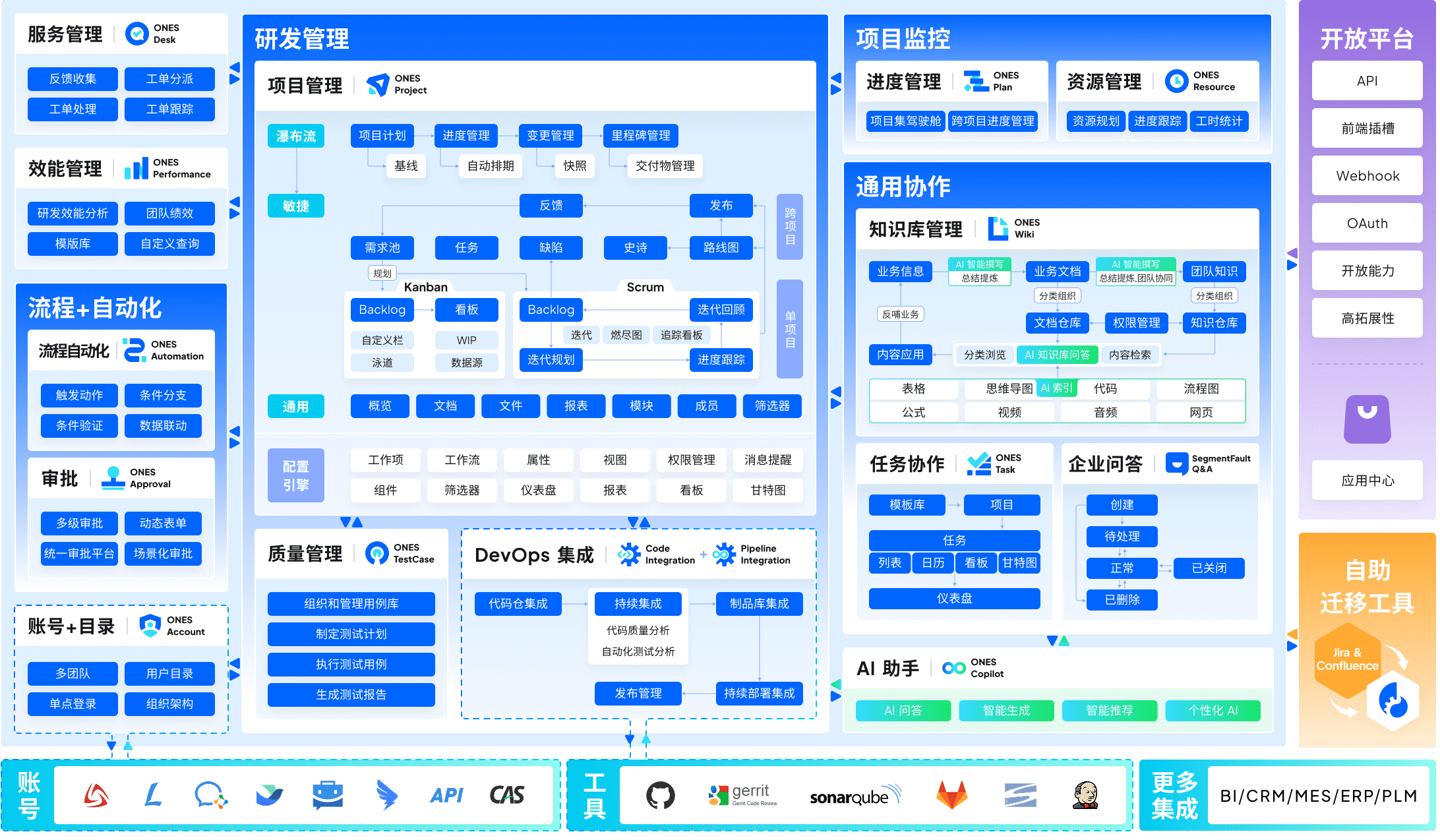
ONES occupies a distinctive position as an enterprise-grade research and development management platform engineered for substantial operational complexity. Its architecture unifies project coordination, demand management, knowledge repositories, quality assurance, continuous delivery pipelines, and source control within a cohesive environment—substantially reducing the integration overhead that typically fragments requirement visibility across multiple vendors.
The platform’s deployment flexibility merits particular attention. Organizations selecting on-premise or air-gapped installations receive functionally identical capabilities to the SaaS offering, eliminating the compromise between data sovereignty and feature access that constrains many alternatives. For entities migrating from Atlassian environments, ONES provides structured transition pathways that preserve workflow logic and historical records.
ONES differentiates through governance depth suited to multi-layered organizational structures. Complex permission topologies, cross-functional collaboration frameworks, and configurable process templates enable standardized requirement handling across distributed teams. The platform’s measurement capabilities further support evidence-based refinement of delivery performance, connecting requirement stability metrics to throughput and quality indicators.
Core differentiators: Unified lifecycle coverage without tool fragmentation; enterprise-caliber configuration for sophisticated organizational needs; quantitative foundation for continuous process enhancement.
OpenProject
OpenProject delivers open-source project coordination with explicit requirements management functionality. Its self-hosted distribution includes backlog structuring, specification documentation, and traceability matrices that map demands through implementation and validation stages.
The platform accommodates teams seeking visual planning integration—Gantt timelines and work package hierarchies coexist with formal requirement artifacts. Community edition licensing removes cost barriers for smaller groups, while commercial support tiers provide professional assistance for production deployments.
Implementation demands moderate technical investment for initial configuration and ongoing maintenance. Organizations without dedicated platform engineering capacity should evaluate support subscription requirements carefully.

Redmine
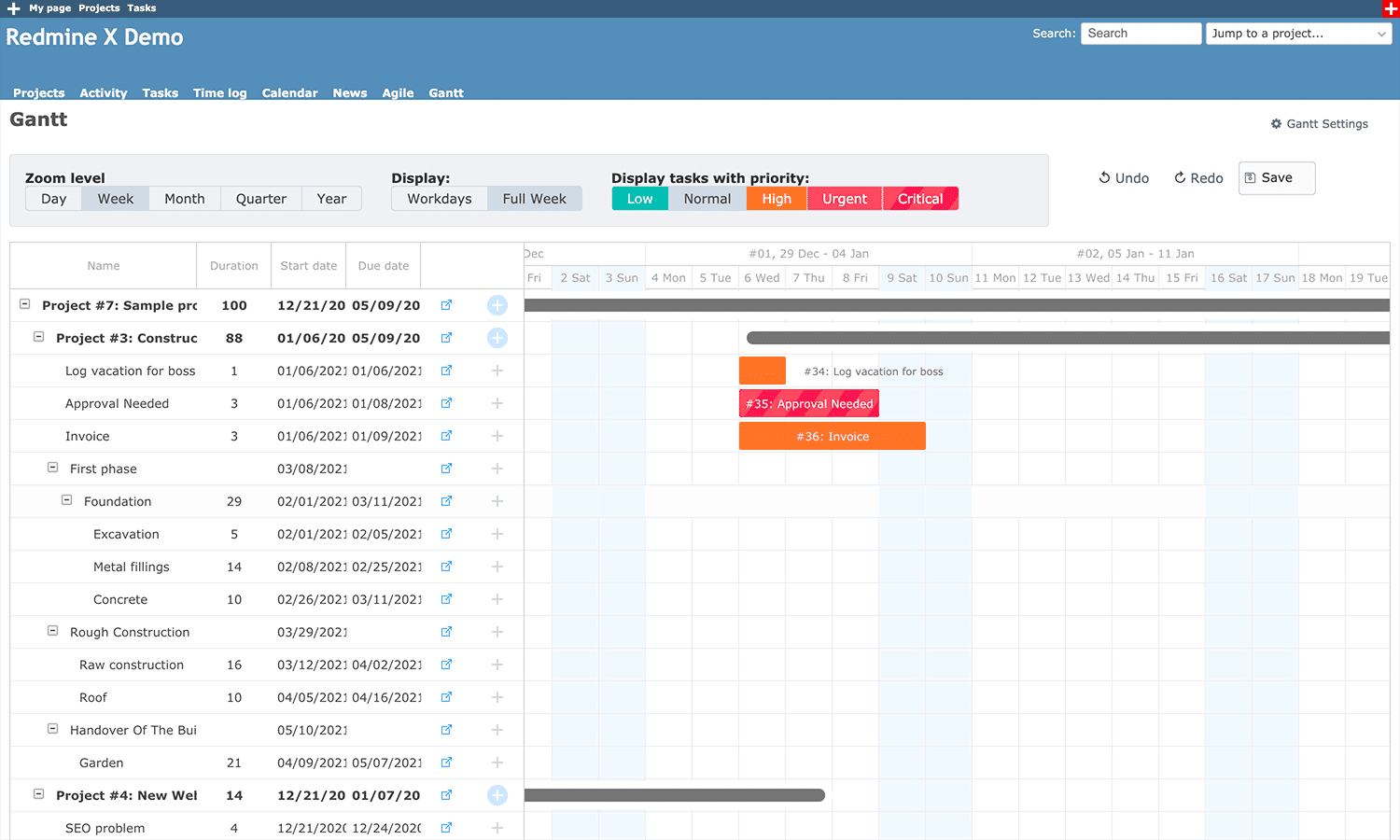
Redmine represents the foundational open-source issue tracking tradition extended through community-contributed extensions. Its Ruby-based architecture deploys across diverse infrastructure, and its plugin repository enables substantial functional expansion—including requirement-specific customizations.
The platform rewards teams with specialized process needs and technical resources to implement them. However, achieving comprehensive requirements management typically necessitates assembling and maintaining multiple extensions, creating ongoing compatibility and security maintenance obligations that accumulate over time.
Tuleap
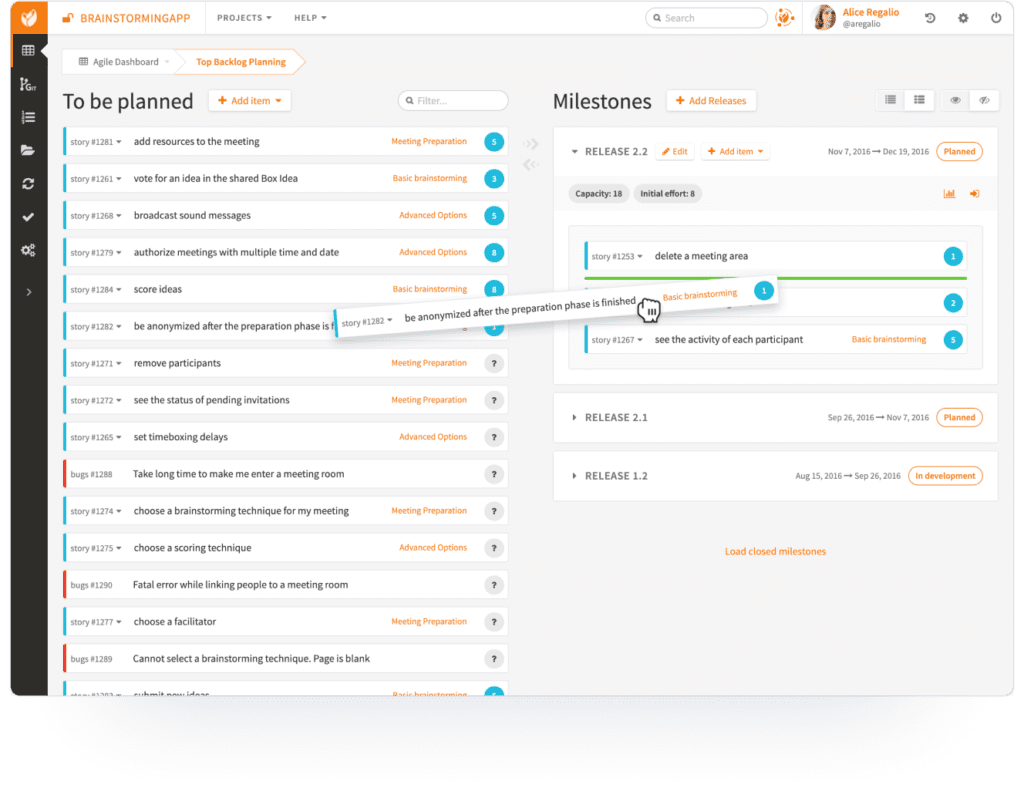
Tuleap positions itself as an application lifecycle management suite with particular strength in regulated contexts. Its traceability implementation enforces documented connections between stakeholder requirements, technical specifications, implementation tasks, and verification evidence—supporting audit demands common in safety-critical industries.
Electronic signature capabilities and immutable change records address compliance frameworks requiring demonstrable control over specification evolution. The trade-off manifests in implementation complexity: teams must commit to disciplined process definition before realizing value.
YouTrack
YouTrack emphasizes workflow customization through its rule-based automation engine. Self-hosted deployment options complement cloud availability, and the platform’s issue-centric model adapts to requirement tracking through field and state configuration.
Agile-oriented teams appreciate sprint planning integration and flexible board visualization. The query language enables sophisticated filtering and reporting, though dedicated requirements traceability demands more architectural investment than purpose-built alternatives.

GitLab
GitLab’s requirements management emerges from its broader DevSecOps platform positioning. Specifications reside within the same repository structure as implementation code and continuous integration definitions, enabling tight coupling between demand documentation and delivery artifacts.
This integration proves advantageous for organizations with mature pipeline practices. However, teams requiring extensive stakeholder collaboration outside engineering functions may find the platform’s requirement capabilities less developed than specialized solutions.
Leantime
Leantime targets smaller research and development groups with methodology-informed tooling. Its lean canvas implementation connects strategic hypotheses to executable tasks and milestone tracking, supporting early-stage product exploration where requirements remain deliberately fluid.
Docker-based self-hosting simplifies deployment for technically capable teams. The platform’s scope intentionally remains constrained—organizations anticipating rapid scaling should assess migration pathways to more comprehensive alternatives.
Selection Framework
Platform selection should proceed from organizational context rather than feature enumeration alone. Consider these decision factors:
- Scale and structural complexity: Multi-departmental coordination with intricate approval chains favors ONES or Tuleap; compact cohesive teams may operate effectively with Leantime or YouTrack.
- Regulatory exposure: Industries subject to formal audit requirements should prioritize Tuleap’s compliance architecture or ONES’s governance depth.
- Technical asset base: Existing Atlassian investment suggests evaluating ONES migration pathways; mature GitLab adoption indicates exploring native requirement integration before introducing additional platforms.
- Total ownership economics: Beyond licensing, assess infrastructure, administration, customization, and training investments across the expected system lifetime.
Emerging Patterns for 2026
Several developments shape requirements management evolution:
Consolidation over best-of-breed assembly: Organizations increasingly resist integrating disparate point solutions, recognizing that interface boundaries between tools become consistency failure points. Unified platforms gain preference where functional breadth meets depth.
AI-assisted specification refinement: Emerging capabilities analyze requirement text for ambiguity, completeness, and testability—flagging problematic phrasing before commitment to implementation.
Embedded measurement: Static documentation yields to living requirements with attached flow metrics, enabling proactive identification of specification instability patterns.
Critical Capabilities Assessment
When evaluating any platform, verify these functional areas:
- Version integrity: Complete historical reconstruction of requirement state changes, including attribution and rationale capture.
- Relationship mapping: Automated or assisted linking between demands, design elements, code changes, and verification activities.
- Access governance: Granular permission schemes preventing unauthorized modification while enabling appropriate visibility.
- Review orchestration: Structured cycles with explicit approval thresholds and escalation paths.
- Export and portability: Data extraction capabilities preventing platform lock-in and supporting long-term archival obligations.
Deployment and Security Considerations
Self-hosting introduces operational responsibilities that cloud alternatives delegate to vendors. Successful implementations address:
- Infrastructure hardening and network segmentation appropriate to data sensitivity classification.
- Backup and disaster recovery procedures with validated restoration testing.
- Patch management velocity balancing security exposure against change risk.
- Monitoring and alerting for anomalous access patterns or system behavior.
Cost Structure Analysis
Direct licensing represents only a portion of total expenditure. Comprehensive assessment encompasses:
- Compute, storage, and network infrastructure for target scale and performance.
- Administrative personnel for deployment, upgrade, and troubleshooting activities.
- Customization development for process-specific adaptations.
- Training and change management for organizational adoption.
- Integration engineering for connections to existing toolchain elements.
Frequent Implementation Errors
Organizations undermining self-hosted requirements initiatives typically exhibit these patterns:
- Underestimating governance design: Deploying technology before defining who may modify requirements, under what conditions, and with what documentation.
- Neglecting migration integrity: Transferring active projects without preserving historical context and relationship mappings.
- Over-customizing prematurely: Extensive bespoke development before understanding baseline platform capabilities and standard practices.
- Insufficient adoption investment: Assuming technical deployment automatically translates to behavioral change.
Frequently Asked Questions
Can on-premise platforms fully substitute Jira for requirements handling?
Qualified affirmation. ONES specifically maintains workflow compatibility that reduces migration friction. Other platforms require more substantial process adaptation. The critical factor is whether the alternative’s traceability and governance capabilities meet or exceed your operational requirements rather than replicating Jira’s specific implementation.
Is dedicated requirements tooling necessary, or can general project coordination suffice?
Dependency on process maturity and scale. General platforms suffice when requirements remain simple, stable, and informally managed. As complexity increases—multiple stakeholder categories, regulatory obligations, extended development horizons—dedicated capabilities for relationship tracking, version control, and structured review become essential rather than optional.
How does requirements traceability differ from version control?
Version control captures sequential states of individual artifacts. Traceability establishes and maintains connections between distinct artifact types across the development lifecycle—demand to design, design to implementation, implementation to verification. Both are necessary; neither alone ensures comprehensive requirement governance.
What drives successful team adoption following platform deployment?
Success correlates with visible executive sponsorship, embedded champion networks, incremental rollout with feedback incorporation, and explicit linkage between platform use and reduced friction in daily work. Mandating usage without demonstrating value typically generates superficial compliance rather than genuine behavioral integration.
Do self-hosted implementations satisfy security requirements for sensitive specifications?
Infrastructure location determines data residency but not inherent security. Properly configured self-hosted environments with appropriate access controls, encryption, monitoring, and maintenance discipline can exceed cloud alternatives in specific threat models. Conversely, neglected on-premise installations frequently underperform professionally managed SaaS security postures. Security emerges from operational practice rather than deployment mode alone.
Concluding Assessment
Requirements inconsistency is fundamentally a process discipline problem that technology enables but does not independently solve. Self-hosted platforms provide the structural foundation—immutable records, governed workflows, and comprehensive traceability—that disciplined processes require.
Among evaluated alternatives, ONES offers the most comprehensive enterprise-grade foundation for organizations prioritizing unified lifecycle coverage without deployment compromise. OpenProject and Redmine present viable paths for cost-constrained technically capable teams. Tuleap addresses specialized compliance demands. YouTrack, GitLab, and Leantime serve narrower contexts with specific methodological or integration alignments.
Final selection should follow structured proof-of-concept evaluation against your specific requirement patterns, organizational constraints, and strategic trajectory—recognizing that platform commitment represents multi-year investment in operational infrastructure.