400-188-1518
8 Best Requirements Management Tools for 2026: Enterprise Software Comparison
Selecting an effective requirements management platform is critical for organizations aiming to reduce scope creep, maintain regulatory compliance, and align technical delivery with business objectives. After evaluating over thirty solutions across integration depth, scalability, and traceability capabilities, I have identified eight tools that demonstrate consistent value for enterprise teams.
Here are the eight requirements management tools reviewed in this guide:
- ONES
- Jira Software
- SpiraTeam
- IBM Engineering Requirements Management DOORS Next
- Innoslate
- Polarion
- Modern Requirements
- Visure Requirements
How to Evaluate Requirements Management Software
Before examining individual platforms, consider these evaluation criteria:
- Traceability depth: Can you map requirements through design, implementation, testing, and deployment?
- Collaboration architecture: Does the tool support concurrent editing, stakeholder review cycles, and approval workflows?
- Compliance readiness: Are audit trails, electronic signatures, and standards alignment (ISO 26262, IEC 62304, DO-178C) built-in?
- Integration ecosystem: How seamlessly does the platform connect with ALM, CI/CD, and business intelligence tools?
- Scalability model: Can the solution accommodate hundreds of users, multiple product lines, and complex permission structures?
Detailed Platform Reviews
1) ONES
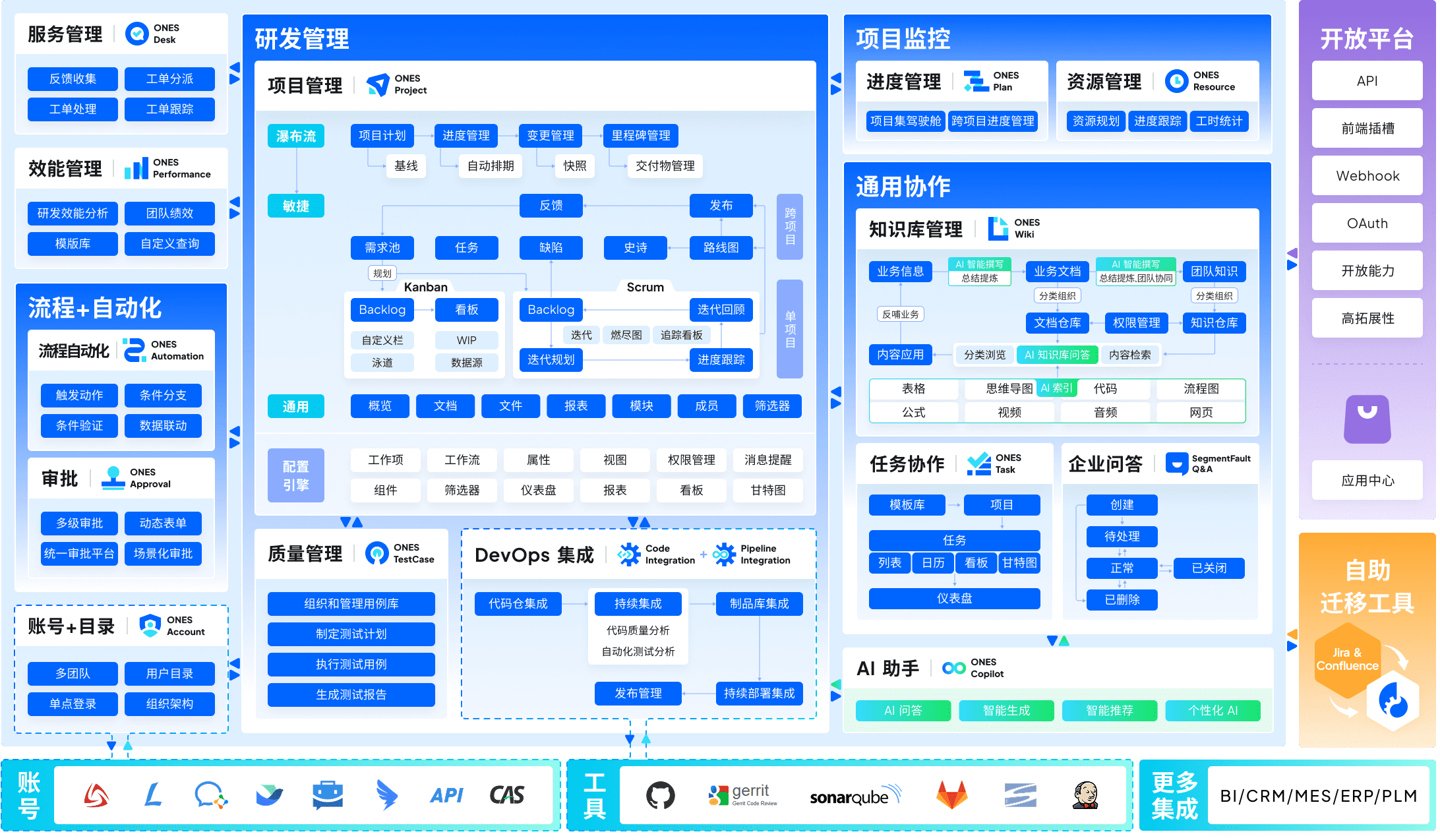
ONES serves as an enterprise-grade research and development management platform designed to unify fragmented toolchains. Organizations operating at scale frequently encounter inefficiencies when project tracking, knowledge documentation, and quality assurance reside in disconnected systems. ONES addresses this by consolidating project management, requirements management, knowledge bases, test management, pipeline orchestration, and code repositories within a single architecture.
The platform emphasizes governance capabilities suited to complex organizational structures. Administrators can configure granular permission models, establish cross-functional collaboration protocols, and implement standardized workflows that accommodate multiple delivery methodologies simultaneously. For leadership teams, ONES provides research and development effectiveness metrics that translate operational data into actionable improvement strategies.
Core capabilities:
- Unified lifecycle coverage eliminating tool fragmentation
- Configurable workflow engines and permission frameworks for multi-team coordination
- Quantitative delivery analytics supporting continuous improvement initiatives
- Enterprise-grade security architecture with role-based access control
Considerations:
- Implementation complexity may require dedicated change management for smaller organizations
- Full capability utilization typically demands organizational maturity in process standardization
2) Jira Software
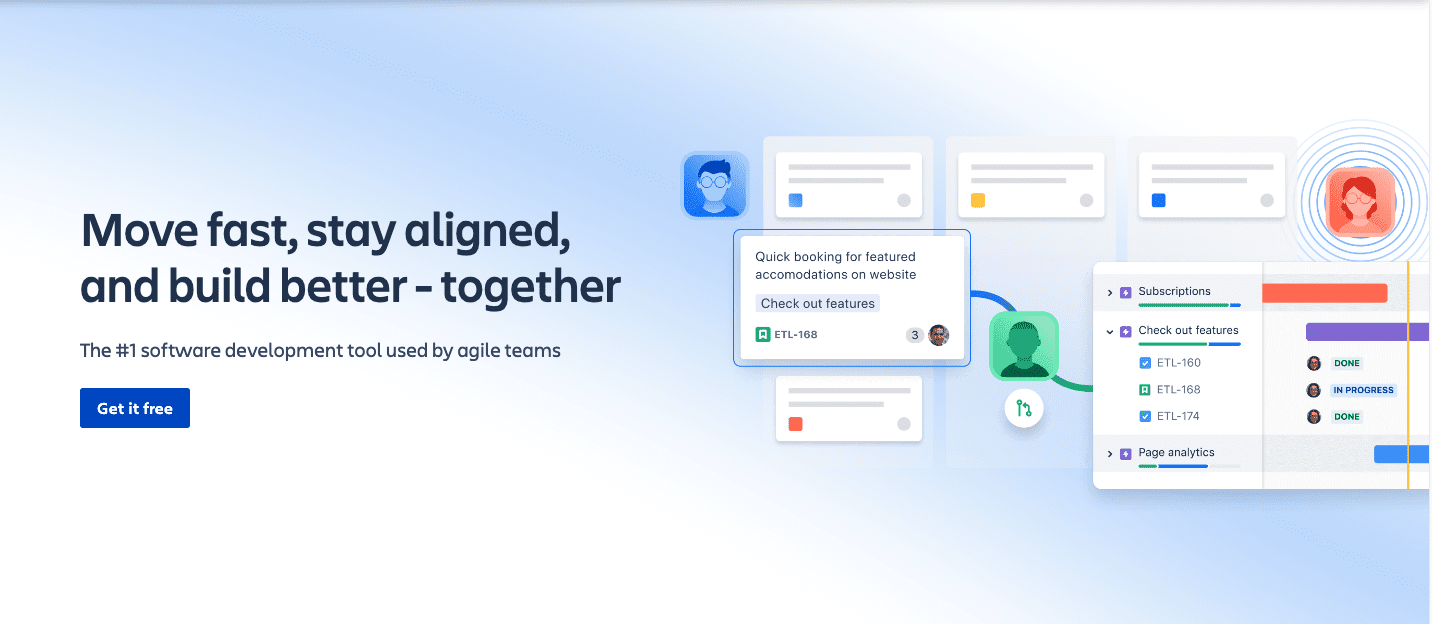
Jira Software remains widely adopted for requirements management within agile and hybrid delivery contexts. The platform structures work through configurable issue types, enabling teams to define dedicated requirement artifacts with customized fields and validation stages. Its hierarchical model—epics, stories, tasks, sub-tasks—provides clarity for complex product hierarchies.
The Advanced Roadmaps feature connects tactical execution to strategic objectives, while Confluence integration bridges documentation and implementation. Dependency visualization across multiple teams helps identify sequencing constraints before they impact delivery timelines.
Notable strengths:
- Extensive marketplace ecosystem with thousands of integrations
- Flexible workflow configuration adaptable to diverse process maturity levels
- Real-time collaboration through @mentions, watch notifications, and inline comments
Limitations:
- Attachment size restrictions on lower-tier plans
- Direct support access limited in free tier
Pricing structure: Standard plans begin at $7.53 per user monthly; Premium at $13.53. Free tier available for teams of ten or fewer.
3) SpiraTeam
Inflectra’s SpiraTeam targets regulated industries where audit integrity and complete traceability are non-negotiable. The platform’s requirements matrix presents interconnected relationships across user stories, test cases, and development tasks, enabling rapid impact assessment when scope modifications arise.
Document-style authoring interfaces reduce friction for stakeholders transitioning from traditional specification formats. Interactive mind mapping visualizes requirement hierarchies, while embedded test coverage indicators surface quality gaps without context switching.
Notable strengths:
- Electronic signature support for formal approval workflows
- Portfolio-level planning accessible across all subscription tiers
- GitLab integration for source code traceability
Limitations:
- Report visualization options lack graphical sophistication
- Support response times may lag during critical implementation phases
Pricing structure: Annual billing starting at $60.60 per concurrent user; minimum three users, scaling to one thousand.
4) IBM Engineering Requirements Management DOORS Next
IBM’s offering represents established enterprise practice for safety-critical and highly regulated domains. The platform excels at capturing, tracing, and managing requirement evolution across extended development cycles. JSON and XML import/export capabilities facilitate interoperability with specialized engineering tools.
Change management workflows include automated notification distribution, ensuring stakeholder awareness of modifications. The architecture scales to accommodate substantial requirement corpora while maintaining query performance.
Notable strengths:
- Mature compliance frameworks for aerospace, automotive, and medical device industries
- Robust linking between requirements, test plans, and design artifacts
- Concurrent editing with conflict resolution for distributed teams
Limitations:
- Total cost of ownership typically exceeds alternatives
- Interface conventions reflect longer product heritage
5) Innoslate
Innoslate distinguishes itself through integrated systems engineering capabilities extending beyond conventional requirements management. Version control, customizable diagramming, and AI-assisted analysis support early-phase concept development. Baseline management preserves requirement states for comparison and regression analysis.
The platform serves organizations employing model-based systems engineering approaches, with native support for MATLAB and STK integrations.
Notable strengths:
- Built-in modeling and simulation for requirements validation
- AI-enhanced analysis for consistency and completeness checking
- Strong aerospace and defense sector adoption
Limitations:
- Learning curve for teams without systems engineering background
- Narrower third-party integration ecosystem compared to generalist platforms
6) Polarion
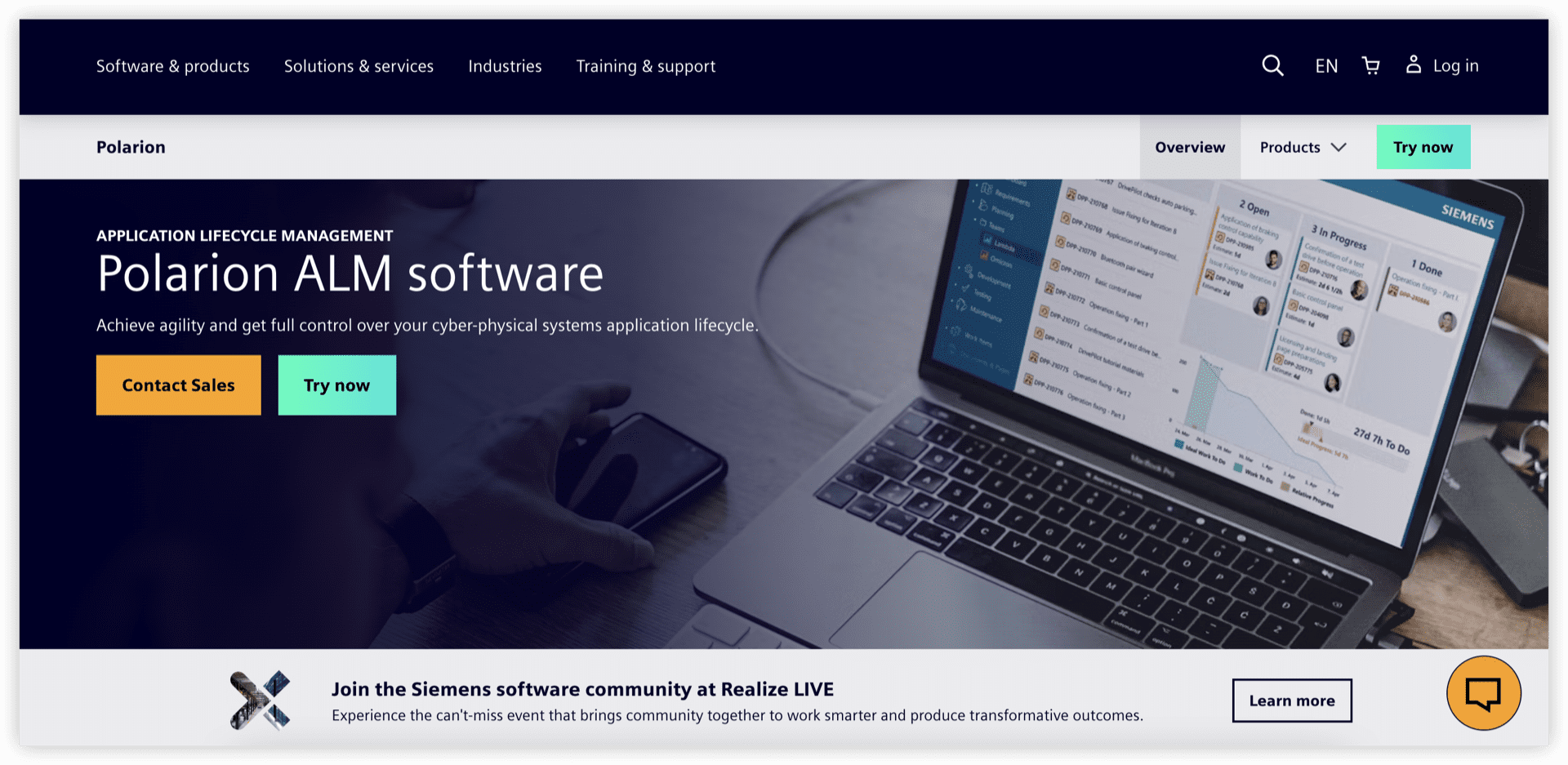
Siemens Polarion emphasizes browser-based collaboration with LiveDocs technology enabling real-time document co-editing. Traceability extends through branching and reuse mechanisms, allowing requirement variants across product lines without duplication.
The platform’s REST API architecture supports custom integration development, while pre-built connectors address common ALM and DevOps toolchains.
Notable strengths:
- Document-centric interface reducing adoption resistance
- Sophisticated variant management for product line engineering
- Comprehensive audit trails for regulatory submissions
Limitations:
- Performance degradation with large-scale concurrent editing sessions
- Customization requires specialized administrative expertise
7) Modern Requirements
Modern Requirements operates as an extension layer for Microsoft Azure DevOps and TFS environments, embedding requirements capabilities within familiar development contexts. Smart document generation transforms structured requirements into publication-ready specifications.
Simulation capabilities enable requirements validation before implementation commitment, reducing downstream rework probability.
Notable strengths:
- Native Microsoft ecosystem integration
- Automated document synchronization reducing manual maintenance
- Simulation-based early validation
Limitations:
- Platform dependency on Microsoft infrastructure decisions
- Limited standalone deployment optionality
8) Visure Requirements
Visure Requirements focuses on traceability-intensive industries including automotive, medical devices, and banking. The platform provides end-to-end requirement tracking with impact analysis, supporting standards such as ISO 26262, IEC 62304, and CMMI.
Customizable workflow engines accommodate organization-specific approval processes, while reporting modules address stakeholder communication needs across technical and business audiences.
Notable strengths:
- Pre-configured compliance templates accelerating certification preparation
- Strong requirements reuse across projects
- Multi-format import/export reducing migration friction
Limitations:
- User interface design reflects earlier generation conventions
- Integration marketplace less extensive than mainstream alternatives
Comparative Summary
| Platform | Primary Strength | Ideal Context | Starting Price Model |
|---|---|---|---|
| ONES | Unified R&D lifecycle | Mid-to-large enterprises seeking toolchain consolidation | Enterprise pricing |
| Jira Software | Agile flexibility | Software teams with diverse methodology needs | $7.53/user/month |
| SpiraTeam | Regulatory compliance | Healthcare, energy, financial services | $60.60/concurrent user/year |
| IBM DOORS Next | Safety-critical traceability | Aerospace, defense, medical devices | Enterprise licensing |
| Innoslate | Systems engineering integration | Complex system-of-systems development | Subscription tiers |
| Polarion | Document collaboration | Manufacturing, product line engineering | Enterprise licensing |
| Modern Requirements | Microsoft ecosystem embedding | Azure DevOps-centric organizations | Per-user licensing |
| Visure Requirements | Standards compliance | Automotive, medical, regulated finance | Enterprise pricing |
Selection Recommendations
Organizations prioritizing toolchain consolidation and research and development effectiveness measurement should evaluate ONES as a primary candidate. Teams operating within established agile frameworks with significant integration requirements may find Jira Software’s ecosystem advantage compelling. For regulatory-intensive contexts where audit trail completeness is paramount, SpiraTeam or IBM DOORS Next provide proven architectures.
Consider conducting proof-of-concept implementations with three to five users before committing to enterprise-wide deployment. This approach surfaces configuration complexity and integration challenges that feature comparisons alone cannot reveal.
Frequently Asked Questions
What distinguishes requirements management tools from general project management platforms?
Requirements management tools provide specialized capabilities for traceability, version control, and compliance documentation that general project management software typically lacks. While tools like Asana or Monday.com handle task coordination effectively, they rarely support bidirectional traceability between requirements, tests, and code artifacts.

How do organizations justify investment in dedicated requirements management platforms?
Quantifiable benefits include reduced rework costs (industry studies suggest 30-50% of project defects originate in requirements), accelerated audit preparation, and improved stakeholder alignment. For safety-critical domains, regulatory compliance mandates effectively require such tooling.
What migration challenges arise when adopting a new requirements management solution?
Common obstacles include legacy document format conversion, historical traceability reconstruction, and user adaptation to new authoring paradigms. Platforms with robust import utilities and professional services support mitigate these transitions.
How should distributed teams approach requirements collaboration?
Prioritize platforms with real-time co-editing, granular permission models, and asynchronous notification systems. Time zone differences amplify the importance of comprehensive change logging and explicit decision rationale capture.